
Height is the point
A deer fence works on height. We have installed both 6′ and 8′ systems; which one a property needs comes down to terrain, what is being protected and how hard the deer are pushing.
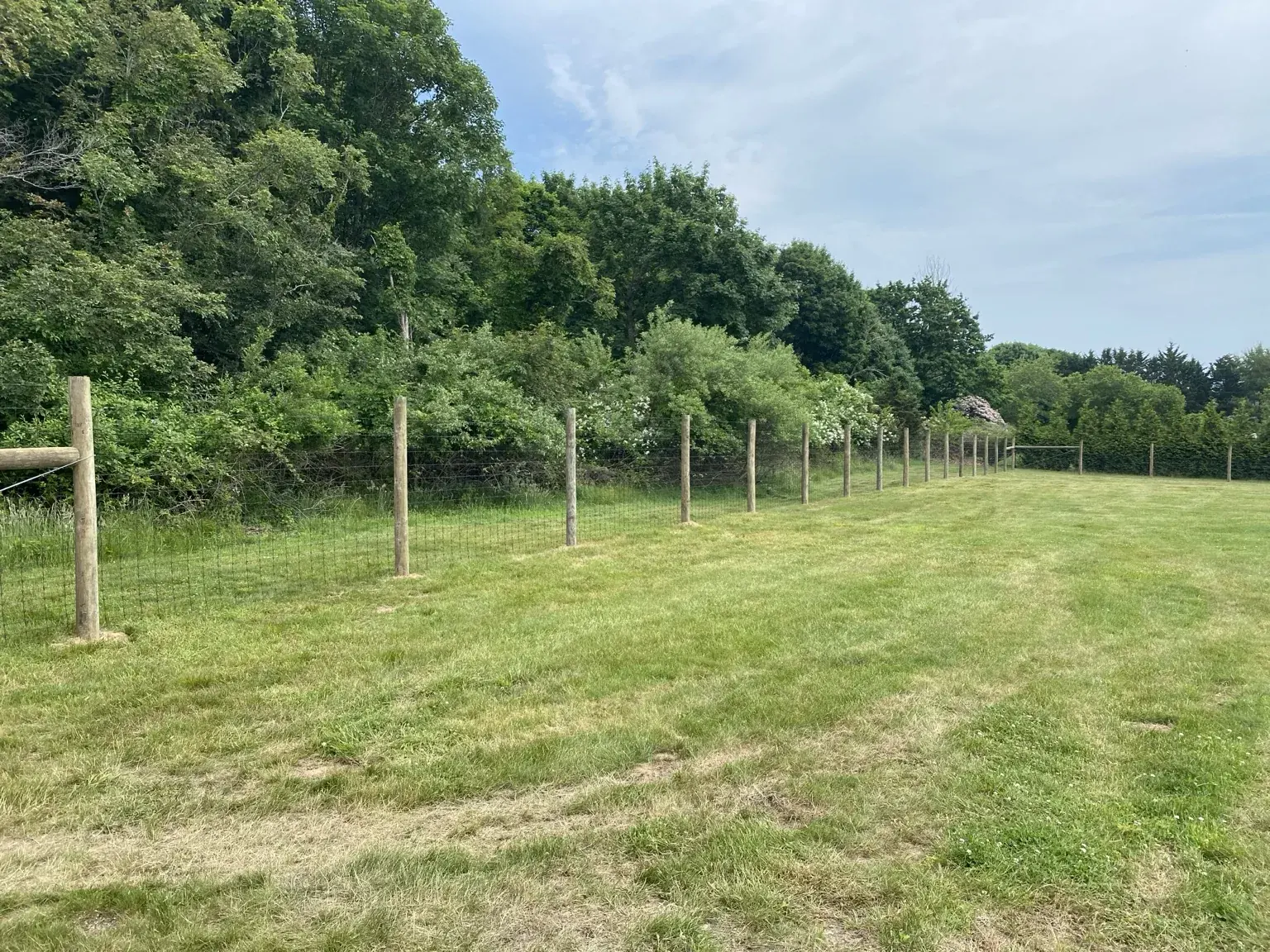
Deer fencing for landscaped, wooded and larger residential properties — black high-tensile knotted wire on 5″–6″ pressure-treated round posts, and low-visibility black-post systems where the fence should not be the thing you notice.
Deer fencing is its own category. Unlike a privacy fence, its primary purpose is deer exclusion — a tall, open barrier that protects planting while keeping the property visually open. It often runs the property or perimeter line, and plenty of ours do, but what defines it is the job it does rather than where it sits. Sunrise installs deer fencing across Suffolk County and the East End, on landscaped grounds, wooded lots and larger residential properties.
A deer fence works on height. We have installed both 6′ and 8′ systems; which one a property needs comes down to terrain, what is being protected and how hard the deer are pushing.
Wire and mesh let light and sightlines through. An 8′ solid fence would be a wall; an 8′ deer fence lets you keep the view of your own property.
Deer fences use pressure-treated round posts, black metal posts, high-tensile wire, welded wire or mesh. What makes it a deer fence is the job it does, not what it is made of.
Deer fencing is not one product, and the differences between these systems are worth understanding before you choose. These are the ones we have actually built.
This is the most substantial deer fence we build and the one we recommend for permanent work. Black high-tensile knotted wire carried on substantial 5″–6″ pressure-treated round posts. We have installed this system at both 6′ and 8′, on long property perimeters, with gates and braced transitions where the run needs them.
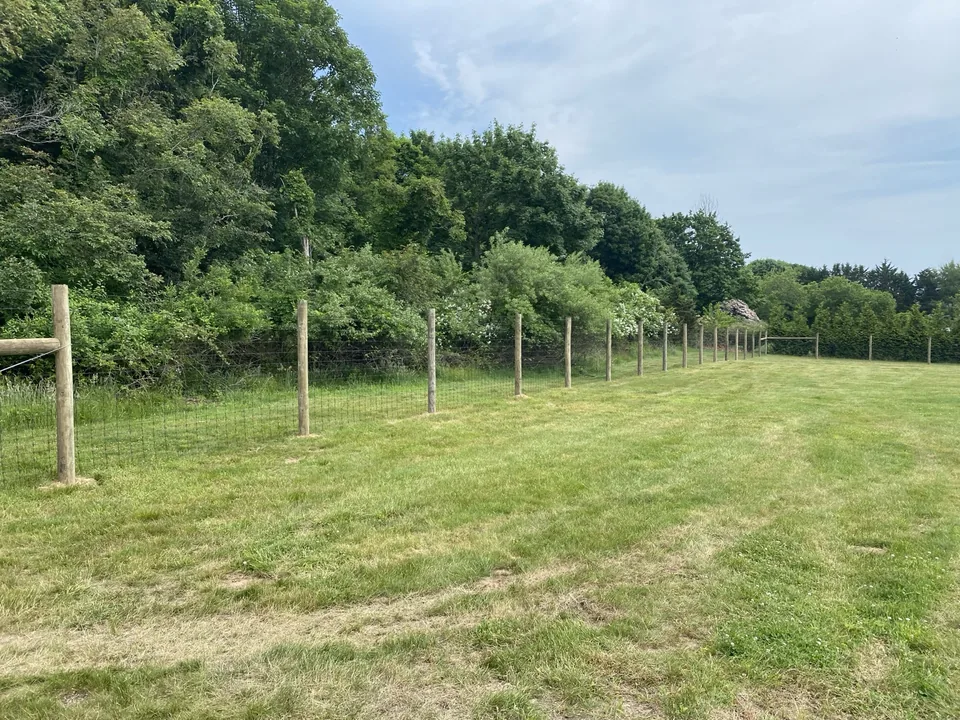
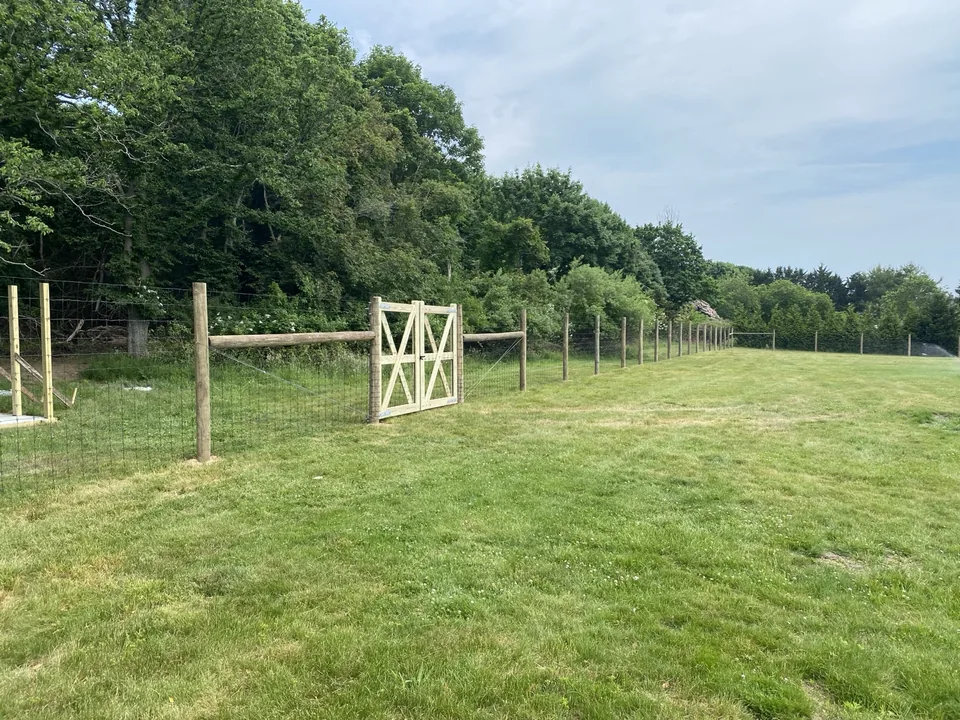
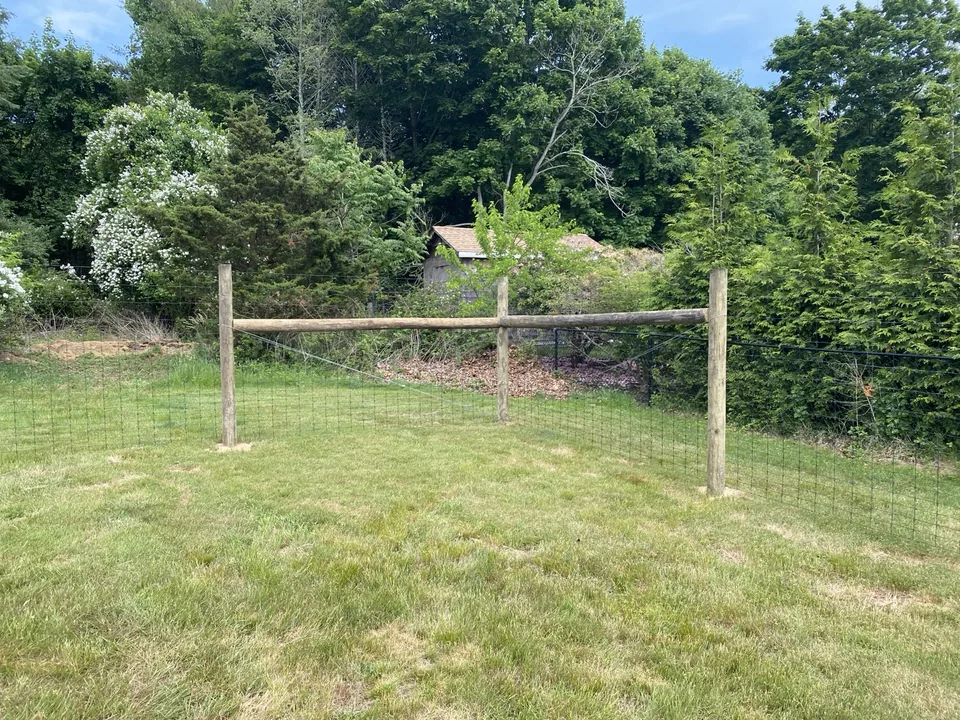
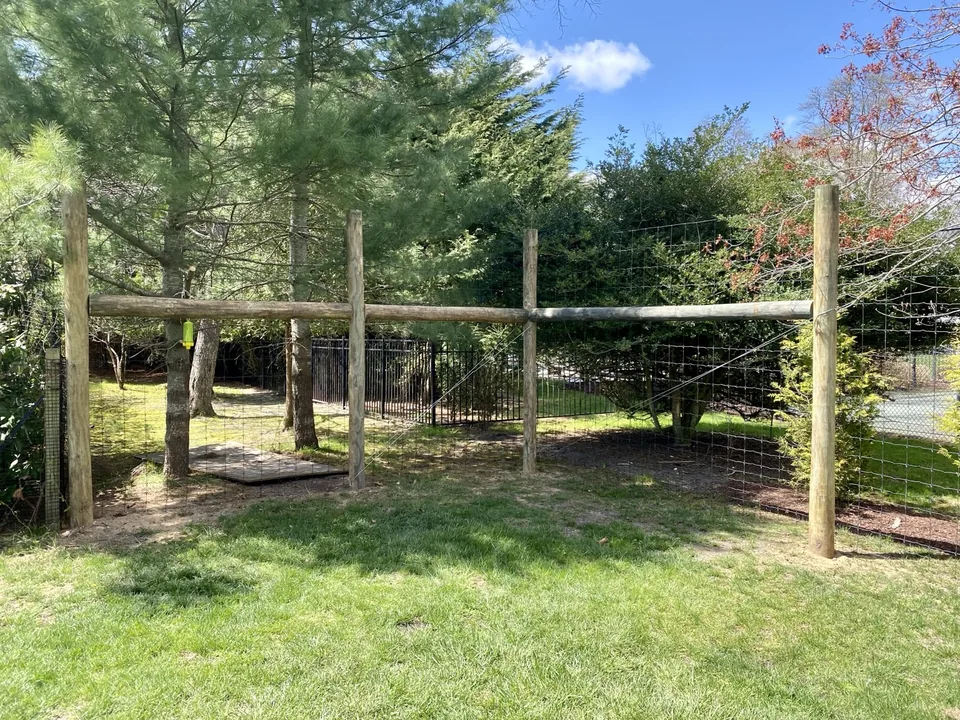
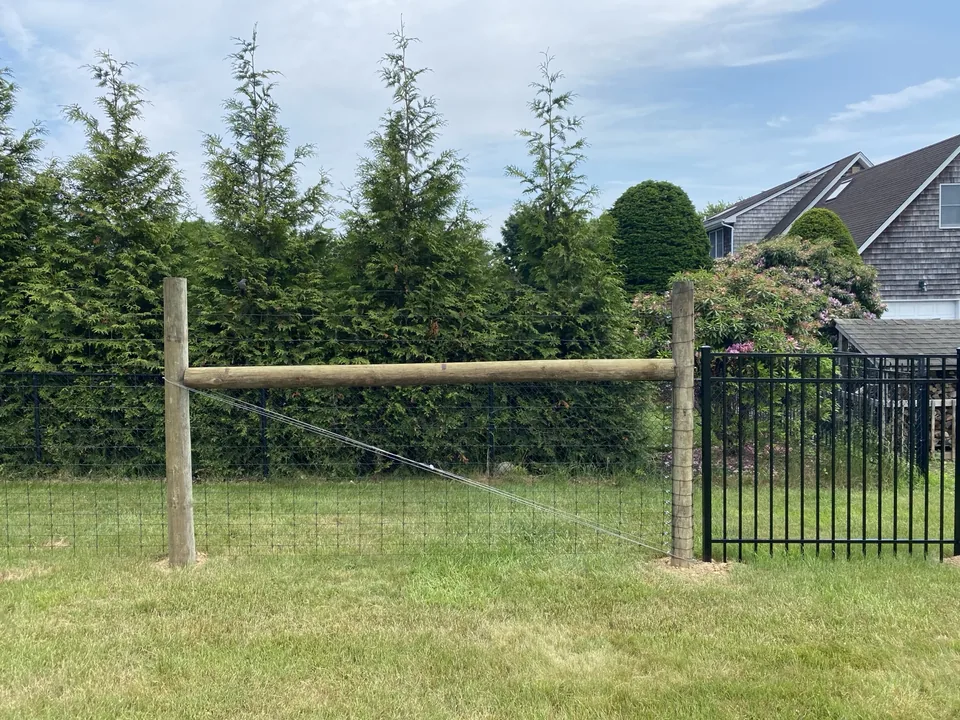
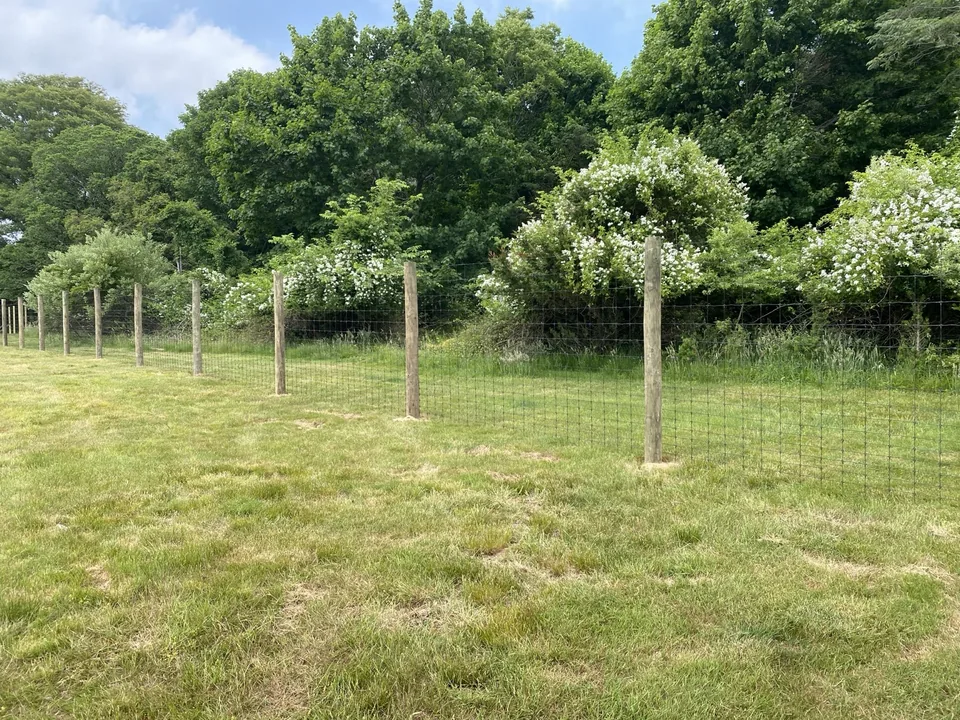
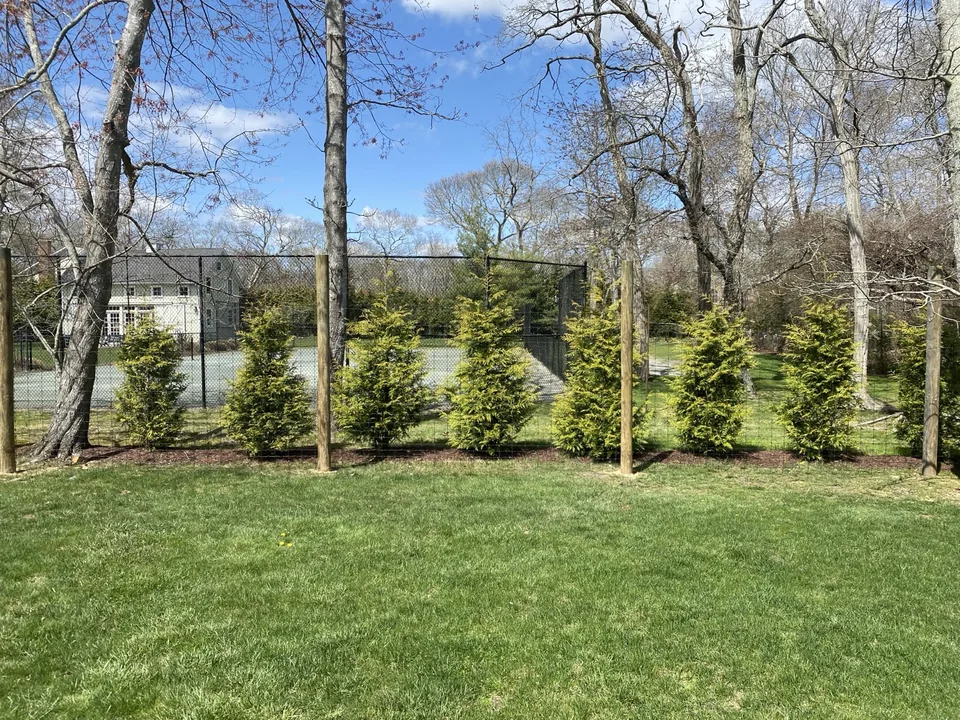
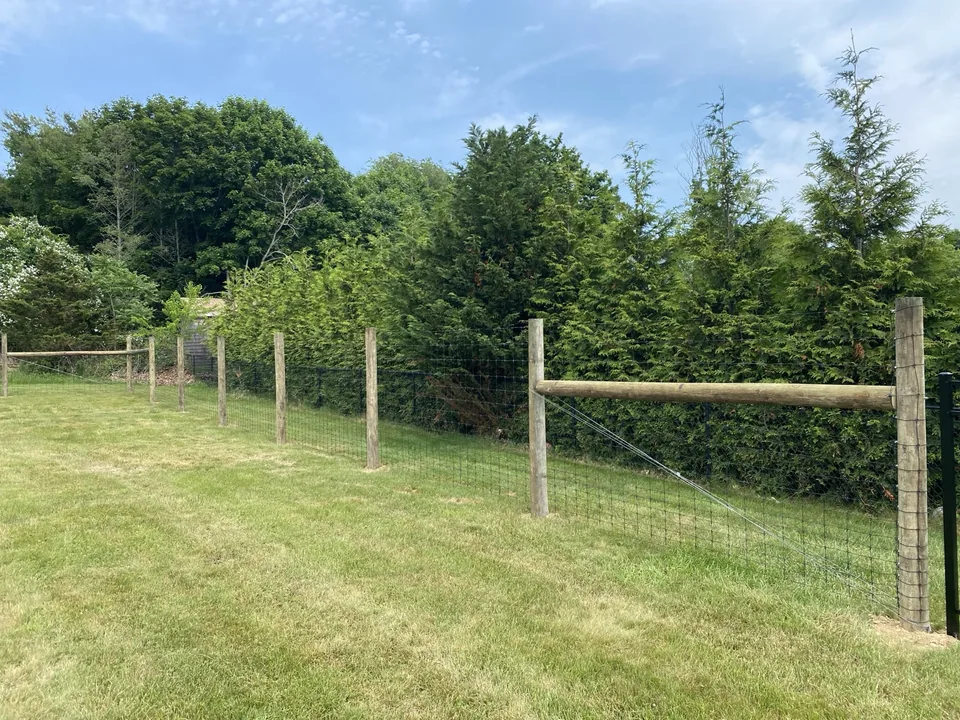
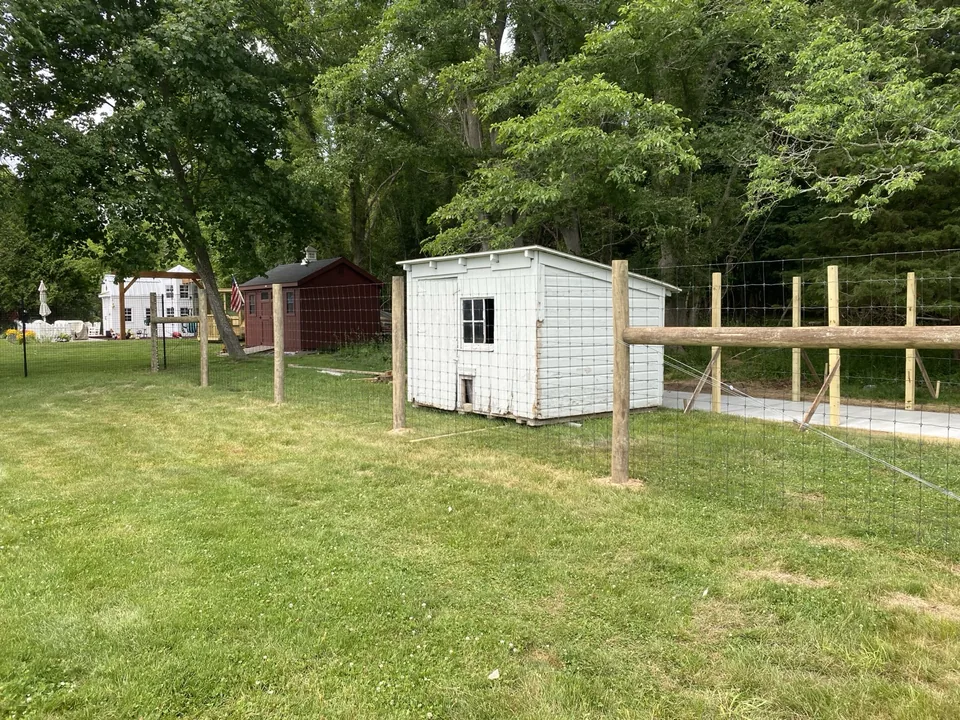
A tall fence carrying tensioned wire puts real load into every post and corner. Substantial 5″–6″ pressure-treated round posts provide the support that tensioned wire needs across long runs, corners, gates and changes in direction.
High-tensile knotted wire holds its shape and tension across long spans. It is a different material from the welded wire used behind a rail fence, and it behaves differently under load.
Gates get built into the run where access needs them, and the fence can transition into other fencing where the property changes character — as it does where one of these runs meets black aluminum.
Where the priority is that the fence not dominate the property, black posts and black mesh are the answer. Against woods, mature planting and hedging, a black fence reads as shadow and largely stops registering — you see the trees, not the barrier. It is the system for homeowners who need deer control but do not want to look at a fence every day.
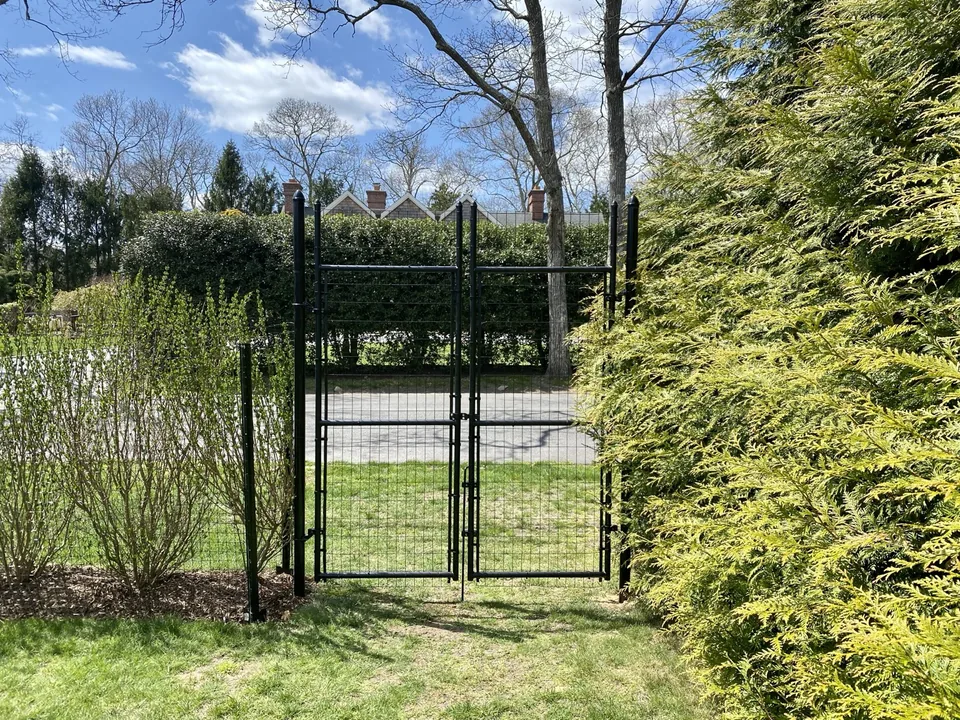
A black fence set just inside a treeline, behind a hedge or against established planting disappears far more effectively than the same fence in the open. Routing it well is most of the job.
Gates in these systems are usually black metal, hung to match the run so the opening is not the thing that gives the fence away.
Request a Preliminary QuoteSome properties need the same line to solve two different problems: keep deer out, and satisfy a pool barrier requirement. On one installation we built that as a stacked assembly — approximately 4′ of 1″×1″ welded wire across the lower portion for the pool-code section, with 2″×4″ wire above it, bringing the fence to roughly 8′ overall. Black posts throughout, so the whole assembly still reads as one fence.
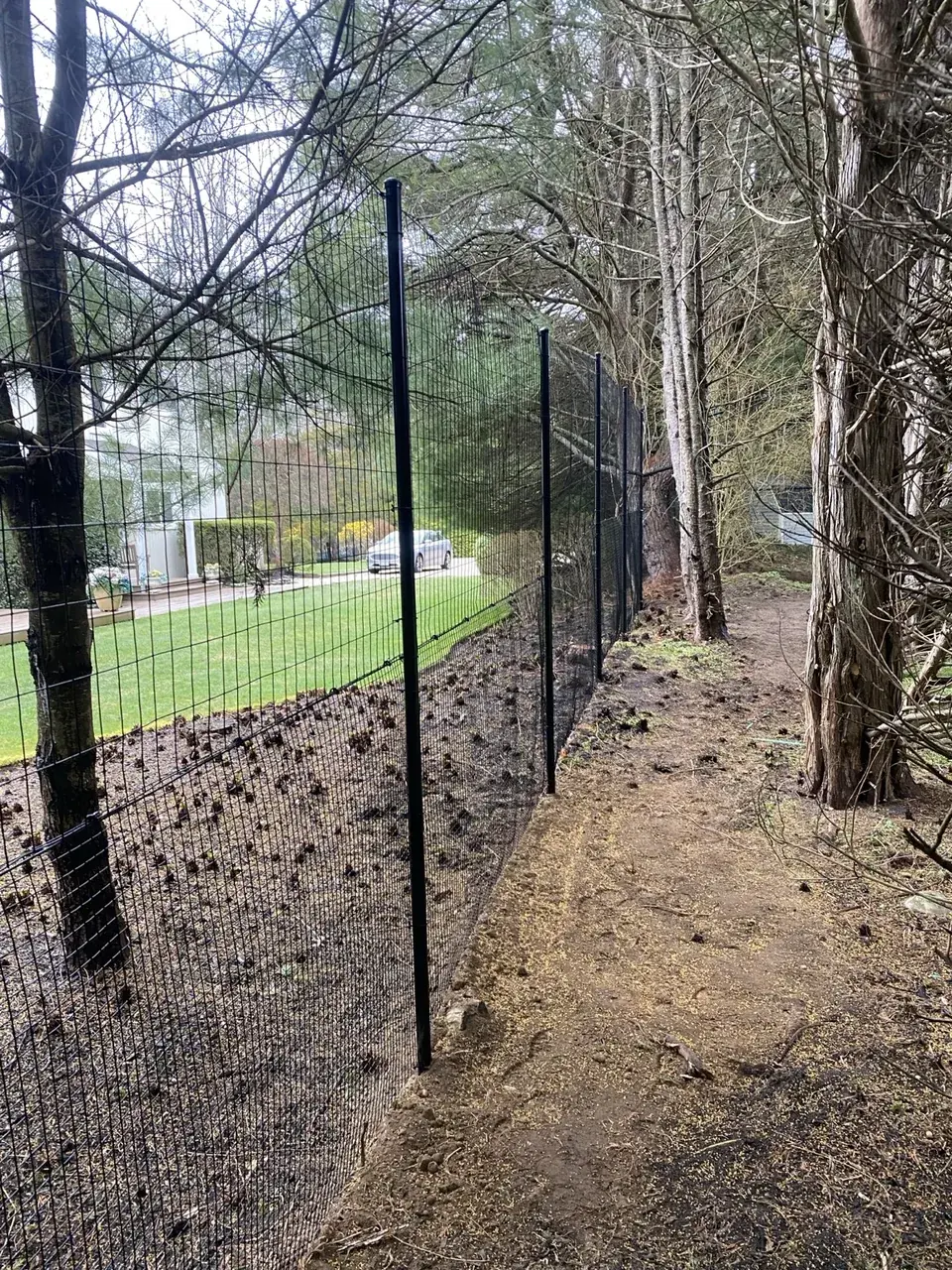
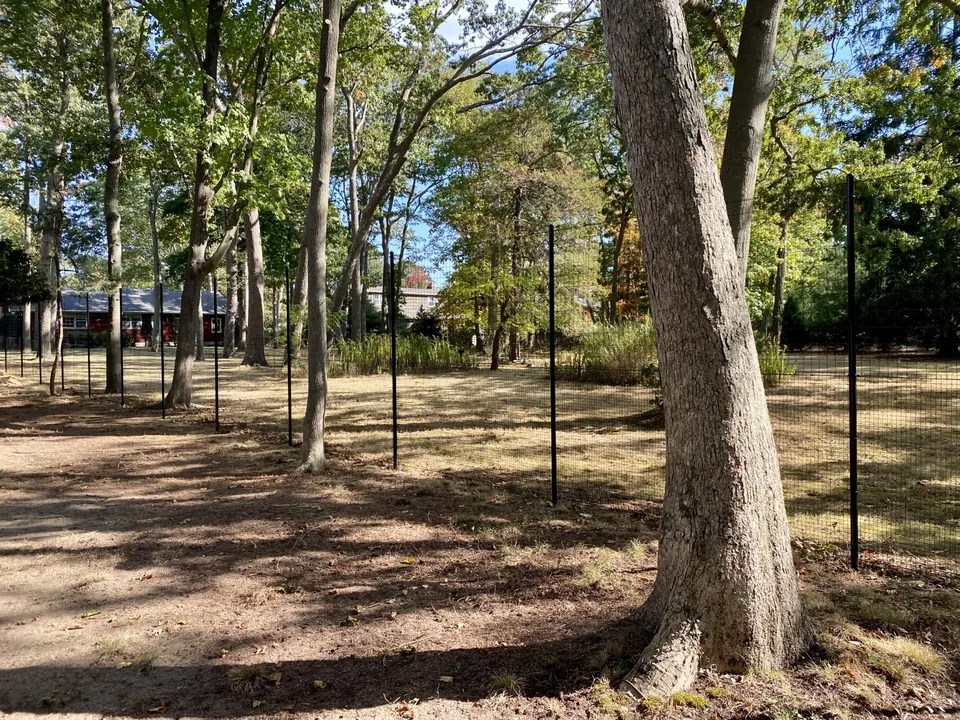
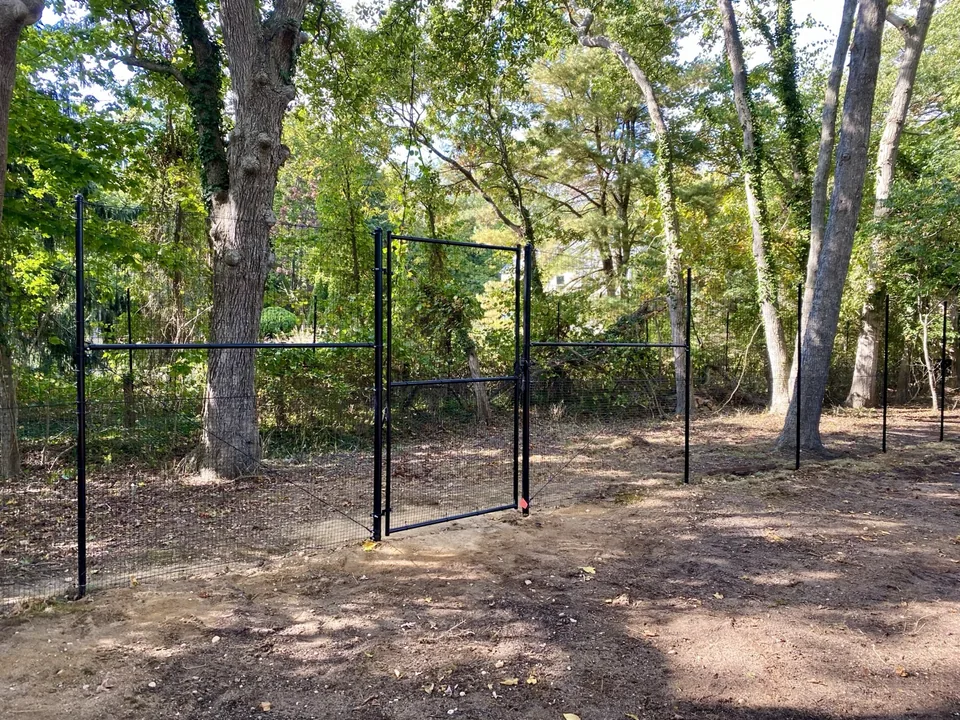
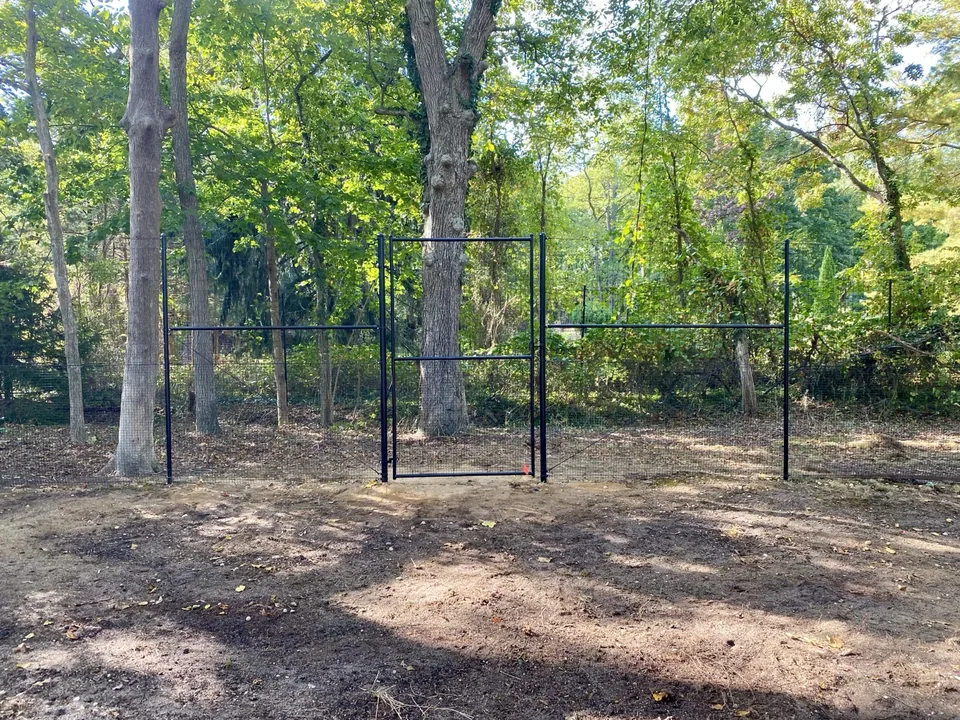
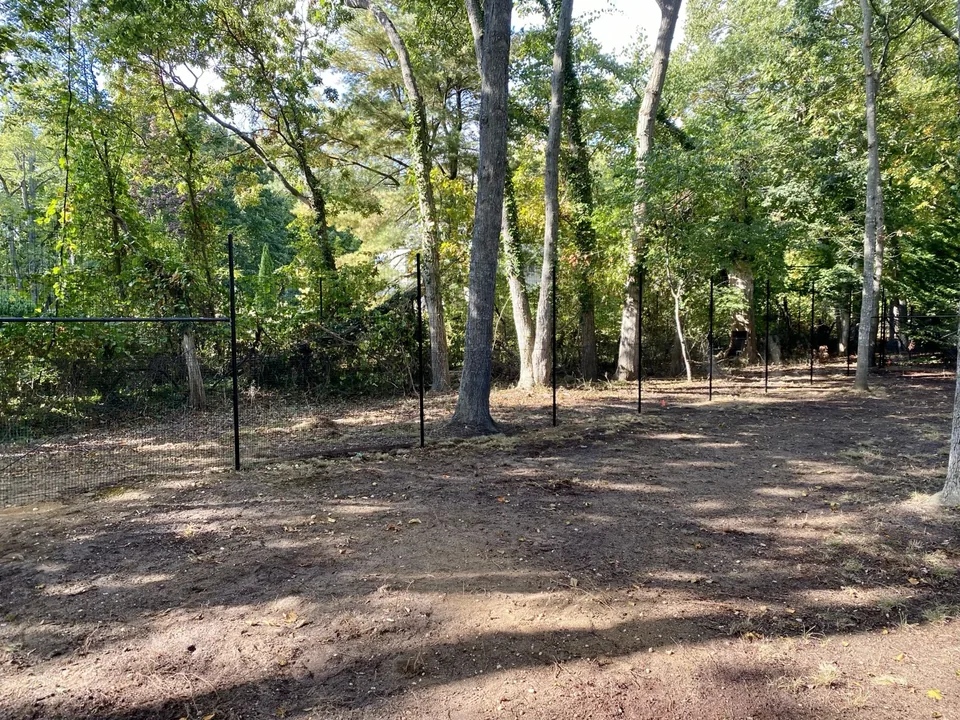
An important limit on this. A deer fence is not automatically a pool barrier. Where the two overlap, the lower section, the gate hardware and the whole configuration have to be selected around the requirements that apply to that specific property. We work to those requirements, but we do not guarantee municipal approval, and this is not a configuration we would apply to a property sight unseen.
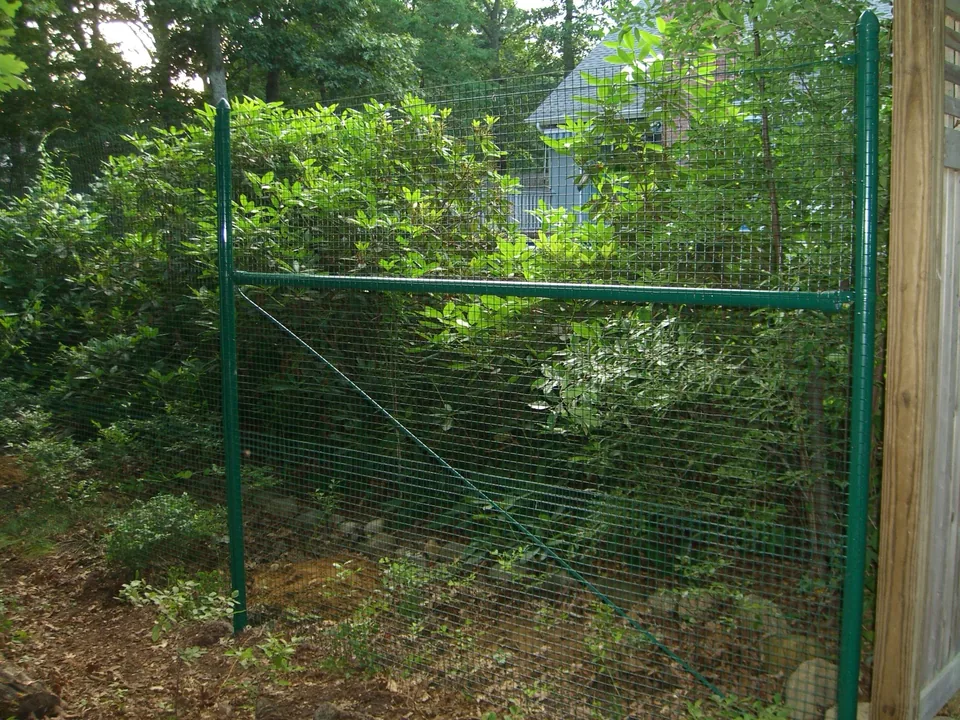
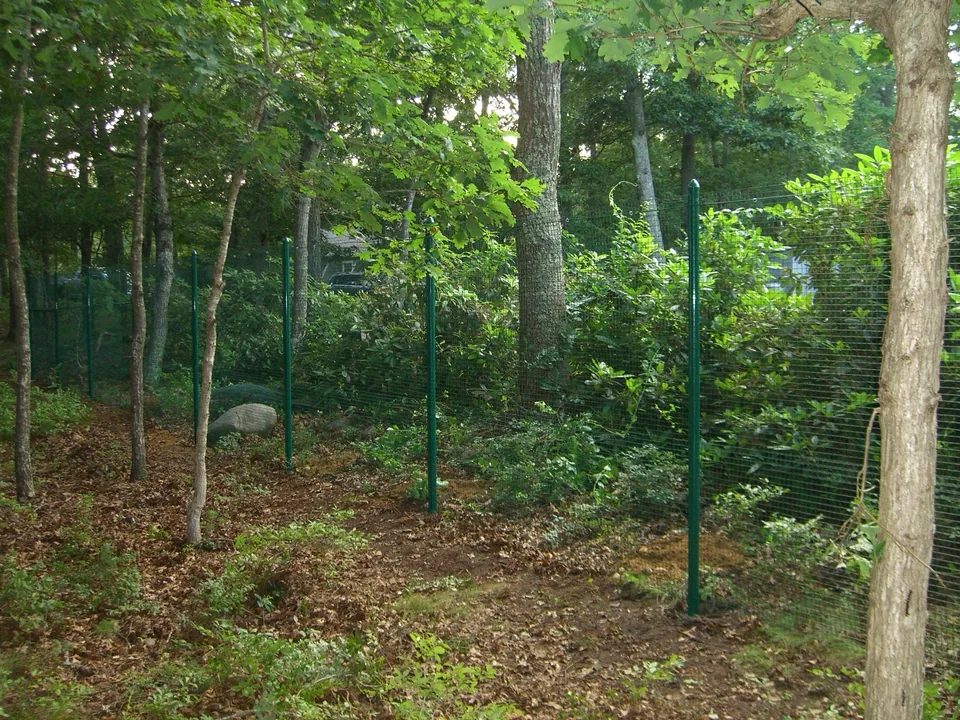
A separate installation and a different approach: a 6′ green pool-code mesh fence on green posts, run through woodland with a mid-rail. Green works the same way black does against a summer canopy — it recedes into the planting rather than standing against it.
We have installed black polypropylene deer mesh — the Tenax-style plastic netting — on some applications. It is the lightest-weight and most visually unobtrusive system we have installed. In our experience it is also the least durable and the least attractive as it ages, so for permanent work we generally steer homeowners toward one of the wire-based systems above.
The useful thing a contractor brings to a deer fence is not one product — it is having installed several and knowing which one belongs on your property. Height, routing through trees, where gates go, whether a pool barrier is in play, and how much you want to see the fence are all decisions that get made before anything is dug.
Most of our deer fencing runs through mature trees and established planting. Setting a straight, tight fence around what is already growing is the part that takes experience.
The person who quotes the job is accountable for the finished result, and the work is done by our own crew rather than passed to subcontractors.
Three decades of fencing across Suffolk County and the East End, in the conditions and on the kinds of properties where deer pressure is a real problem.
Deer fencing often depends on routing, gates and fitting the system to an established property. Read verified customer reviews collected through NiceJob about the experience of working with Sunrise.
We have installed both 6′ and 8′ deer fencing. Which one suits a property depends on the terrain, what is being protected and how the fence is routed, so the height is decided on the site rather than from a rule.
For permanent installations we generally favour black high-tensile knotted wire on 5″–6″ pressure-treated round posts. It is the most substantial of the systems we install and the one we would put on a long property perimeter that needs to stay put.
Yes. Black posts and black mesh read as shadow against woods and mature planting, and a fence set just inside a treeline or behind a hedge largely disappears from the house. Placement matters as much as the material.
Yes. We have built both black metal gates in low-visibility systems and wood gates with braced rail transitions in round-post systems, sized to the opening and the access the property actually needs.
Sometimes, with the right configuration. On one installation we built an approximately 8′ fence as a stacked assembly: roughly 4′ of 1″×1″ welded wire on the lower portion for the pool-code section, with 2″×4″ wire above it to reach the full deer-fence height. The lower barrier and the whole configuration have to be selected around the requirements that apply to the specific property. We do not guarantee municipal approval.
We have used black polypropylene deer mesh on some applications. It is the lightest-weight and most visually unobtrusive system we have installed, and in our experience the least durable and least attractive over time, so for permanent work we generally steer homeowners toward the wire-based systems.
Yes, and most of our deer fencing does. We have run these fences through mature trees, along wooded property lines and around established planting, where routing the fence and setting the posts around what is already growing is most of the work.
Deer fencing is usually one part of what a property needs. These are the paths worth following from here.
Share the property address and what you are trying to protect. We will review the layout, existing conditions and the most appropriate next step.
Explore financing through Wisetack and check your rate without affecting your credit score. Review available options before deciding how you want to pay.