

Where a railing stops being optional
Most railing projects start the same way. A homeowner finishes a raised patio, a terrace on a retaining wall, a deck or a porch, and discovers that the edge needs a guardrail — and that every obvious way of providing one works against the space they just spent money creating.
That is the problem worth solving. A railing has to satisfy a real safety requirement, and it has to do it without turning an outdoor room into an enclosure. Which system is right depends almost entirely on what is on the other side of it.
We install outdoor railings across Suffolk County as a genuine residential service. Fencing remains our primary business and railings are the smaller side of it, but this is real work we take on: cable, aluminum, deck, porch and stair railings for projects that suit how we build. What it shares with the fencing side is the thing that matters most here — the person who quotes the job is accountable for the finished result, and we do not subcontract.
What we install
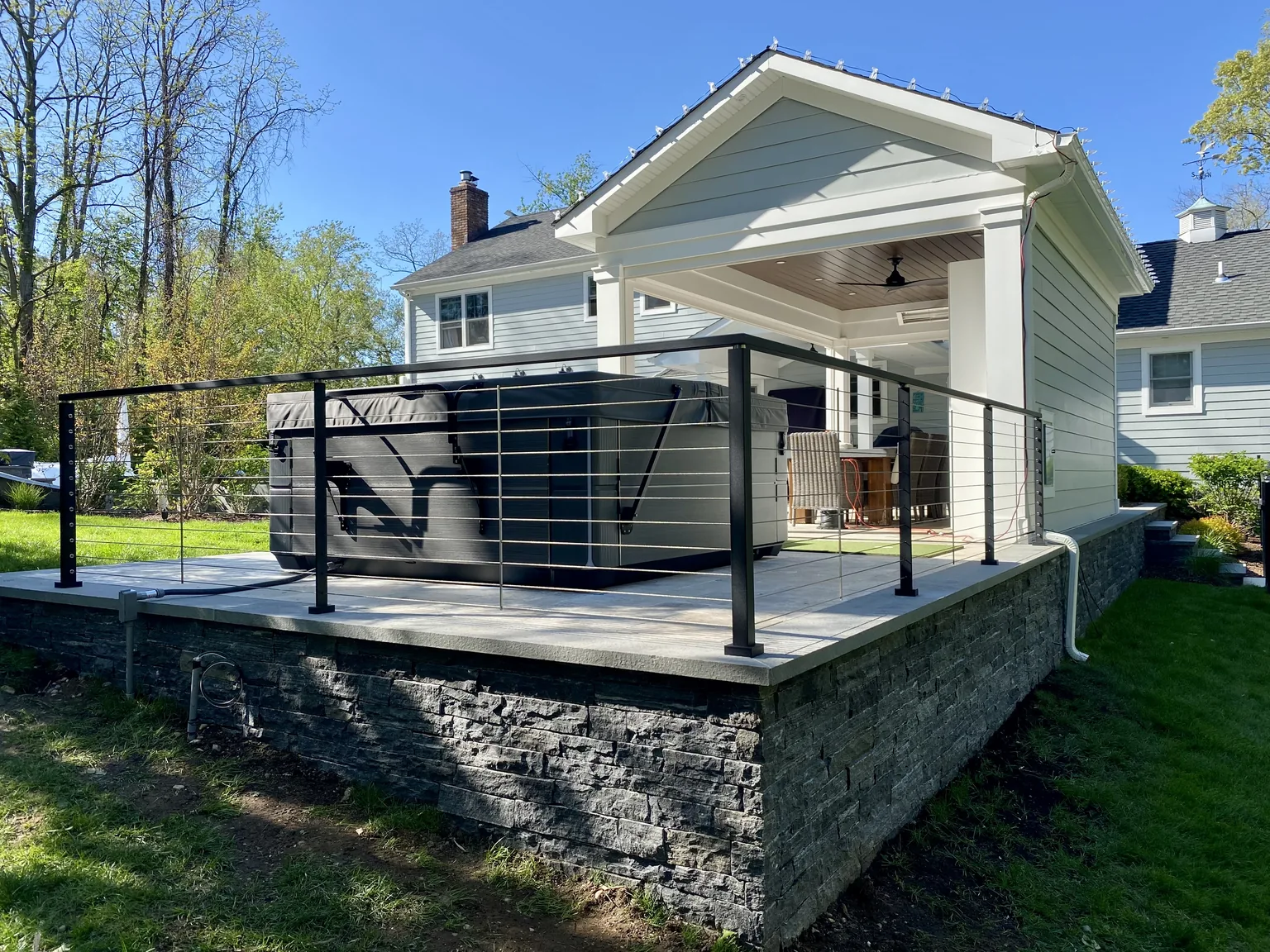
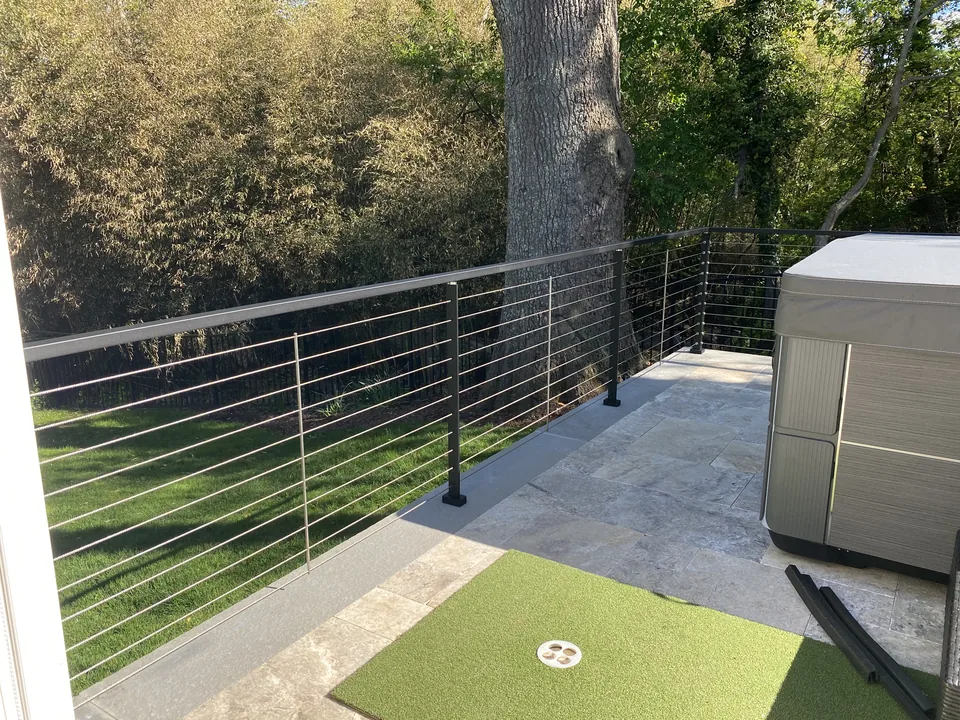
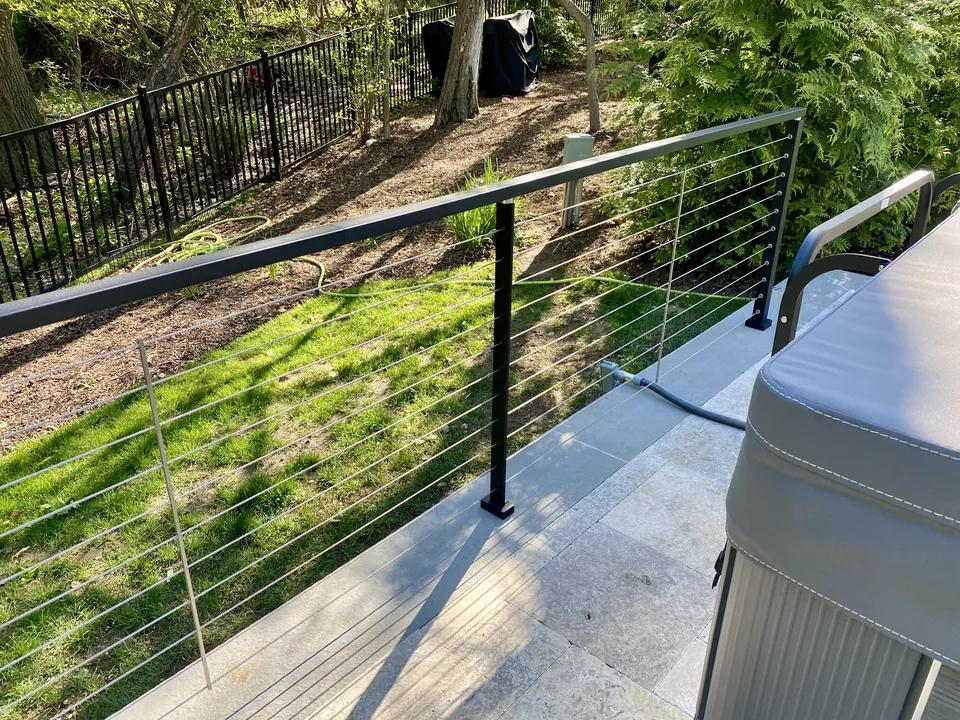
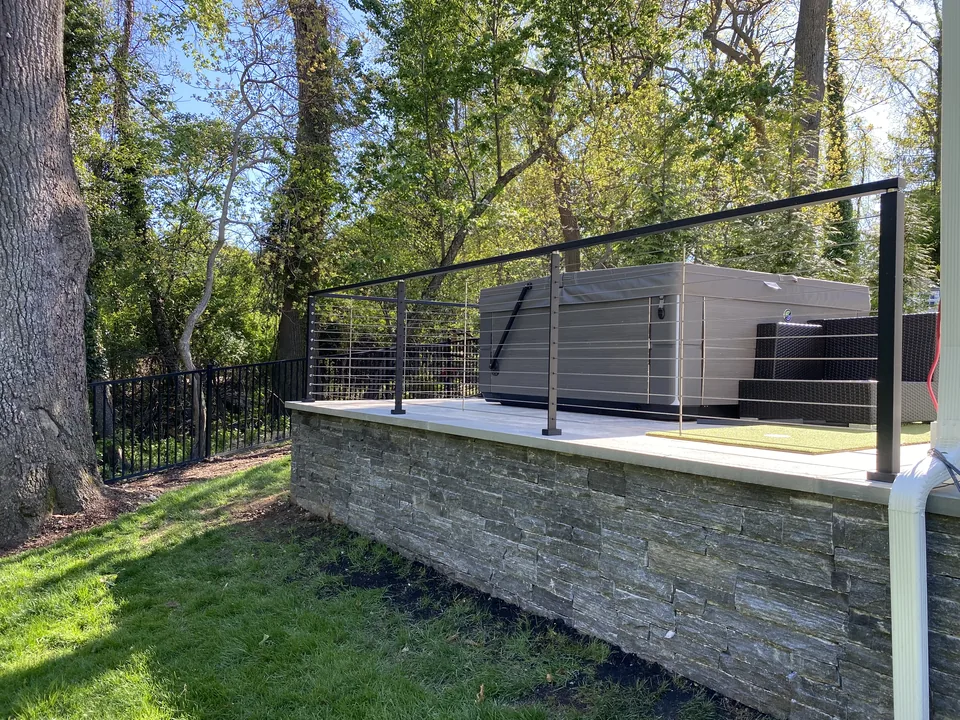
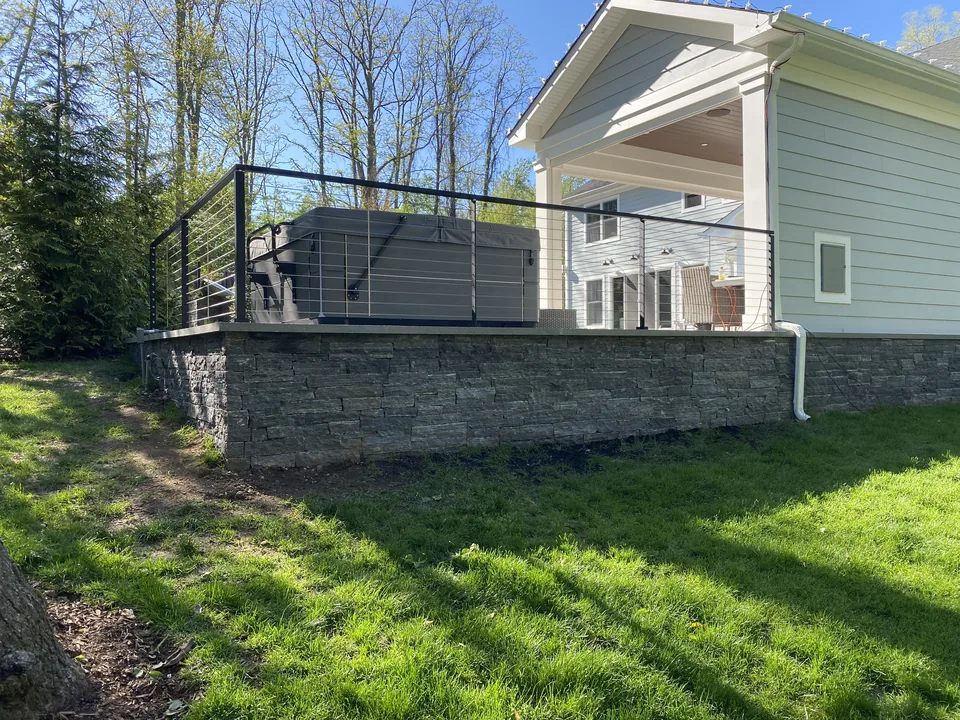
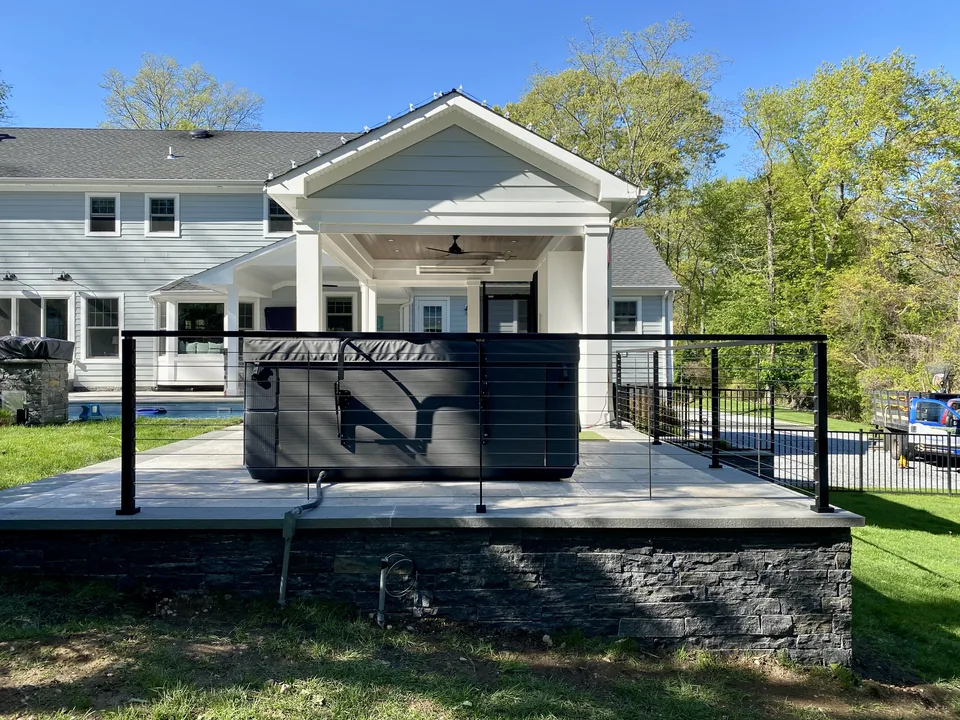
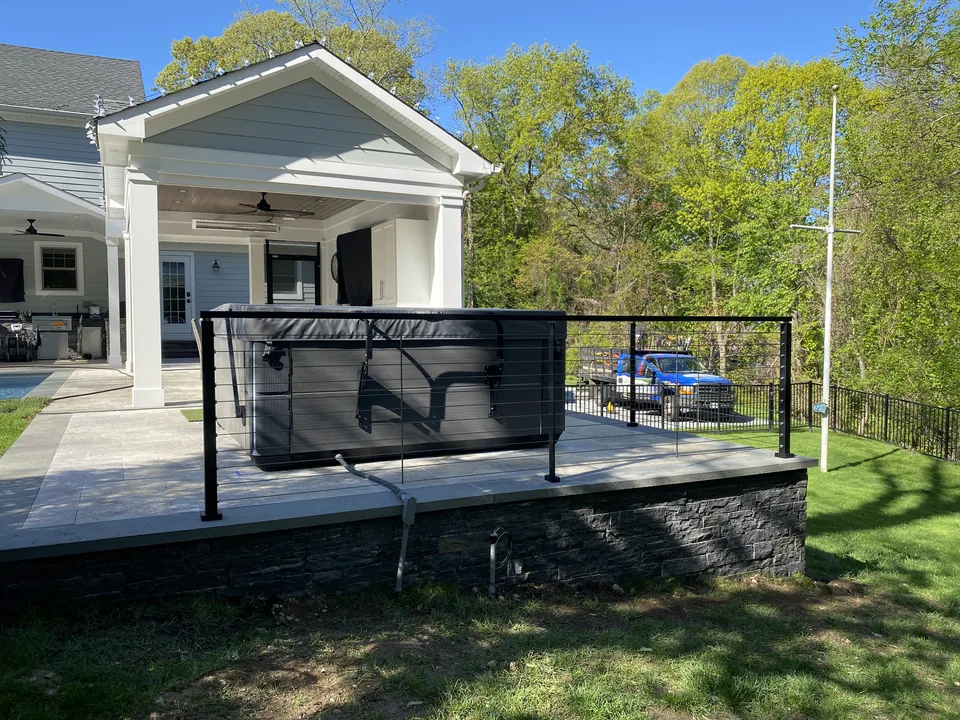
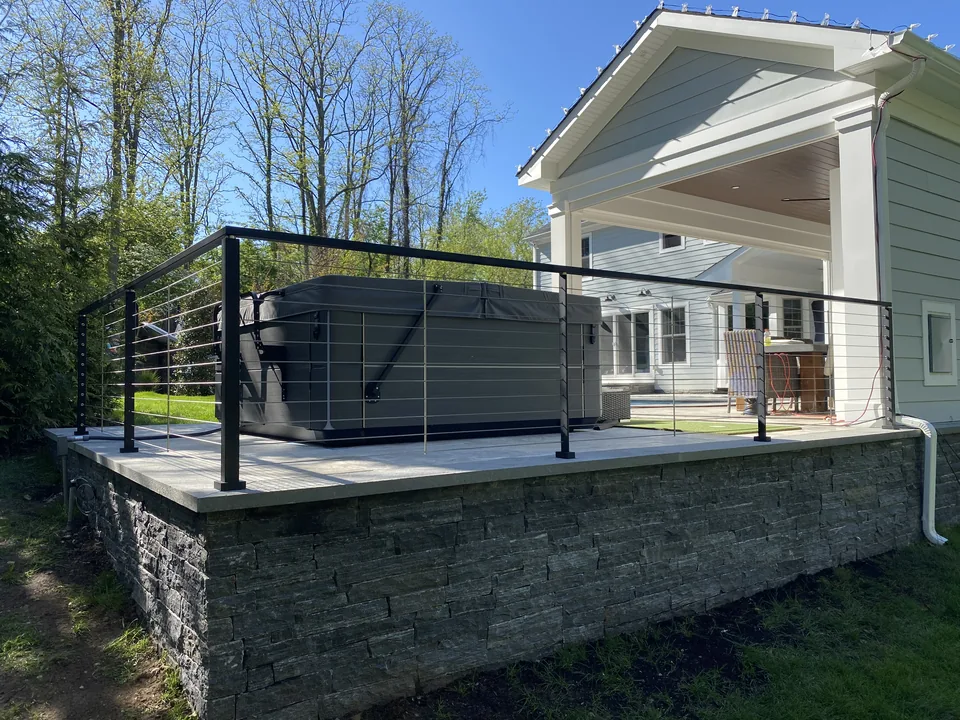
- Cable railing. Powder-coated aluminum posts carrying horizontal marine-grade stainless cable. The most open system available — it meets the guardrail requirement while leaving the view essentially intact. Best suited to raised terraces and outdoor living spaces where the landscape is the point. Costs more than picket, and depends heavily on installation quality: tension and layout are what separate a good cable railing from a poor one.
- Aluminum railing. Powder-coated, low maintenance, no rust and no repainting cycle. The straightforward answer where the railing is defining an edge rather than framing a view. Available in traditional and contemporary profiles to suit the architecture.
- Deck, porch and stair railings. The everyday cases — a raised deck, a front porch, a run of steps. These are usually about getting proportion and detailing right so the railing reads as part of the house rather than something bolted onto it.
How to decide between them
Start with what is on the other side. If it is woods, water, or a yard you have invested in, cable railing is worth the premium — it is the only system that genuinely gets out of the way. If the railing borders a driveway, a side yard or a neighbouring fence line, that premium buys you very little and aluminum is the sensible choice.
Then consider the architecture. Cable reads contemporary: horizontal, minimal, no ornament. On a traditional colonial or a shingled cottage it can look imported from a different house. Aluminum profiles come in both vocabularies, which makes them easier to match to an older property.
Maintenance rarely decides it. Both are powder-coated aluminum and both are close to maintenance-free. Cable relaxes slightly in its first season and benefits from a tension check after the first year; beyond that, you rinse it when you rinse the patio.
What we do and what we do not
Sunrise Custom Fence East is a fence company. Residential fencing and pool fencing across Suffolk County since 1992 — cedar, PVC, aluminum, frameless glass pool enclosures and pool-code barriers, from the South Shore out to the Hamptons and the North Fork.
Railings are a genuine part of that work, and have been for years. They are not the majority of it. We take on residential railing projects where the work suits how we build, and we decline commercial guardrail packages — that is a specialty and you are better served by someone who does it every day.
If a railing is what you need, we will build it properly. If what you actually need is a fence, that is the part we have been doing longest.
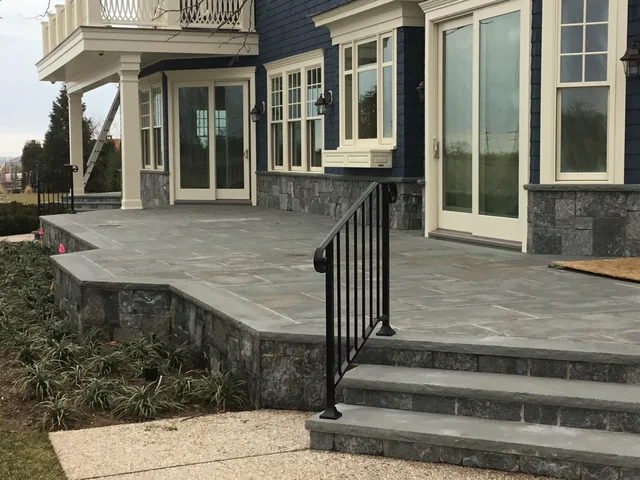
Fabricated aluminum handrails in East Islip
Two separate exterior stair runs on the same Moorings waterfront project, each fitted with a single custom-fabricated, powder-coated aluminum handrail.



Railing Installations
See railing work we've completed on real Long Island properties, with current service focused on Suffolk County.
Waterfront Fencing, Pool Safety & Railings
Two custom-fabricated, powder-coated aluminum handrails provide a clean graspable rail at separate exterior stair runs.
View Complete Project →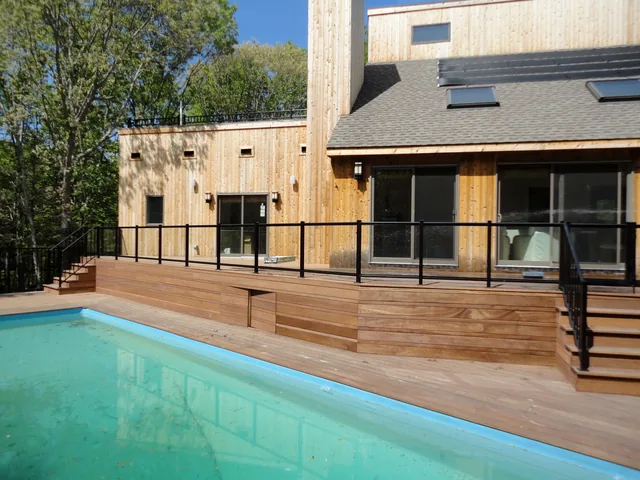
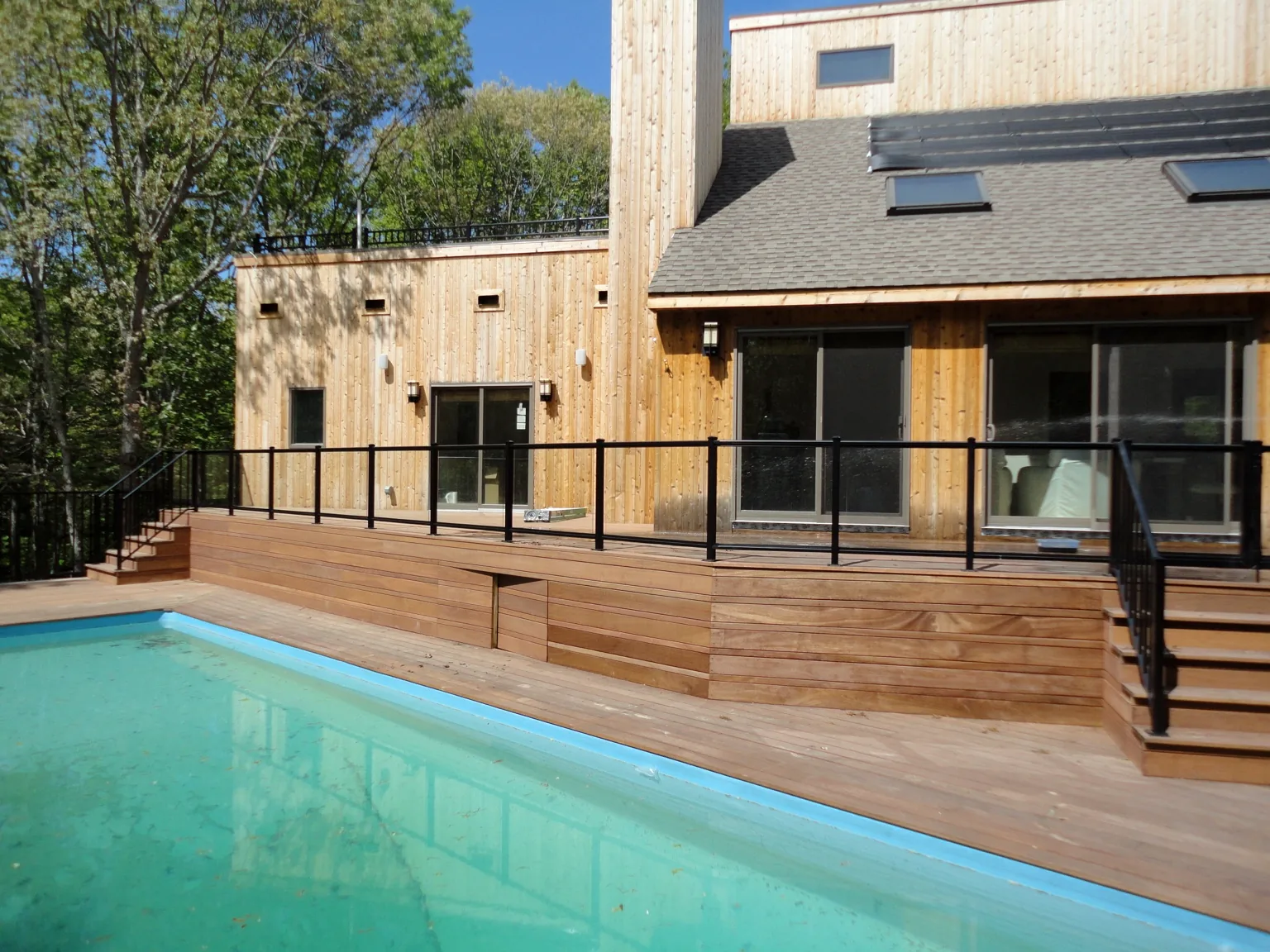
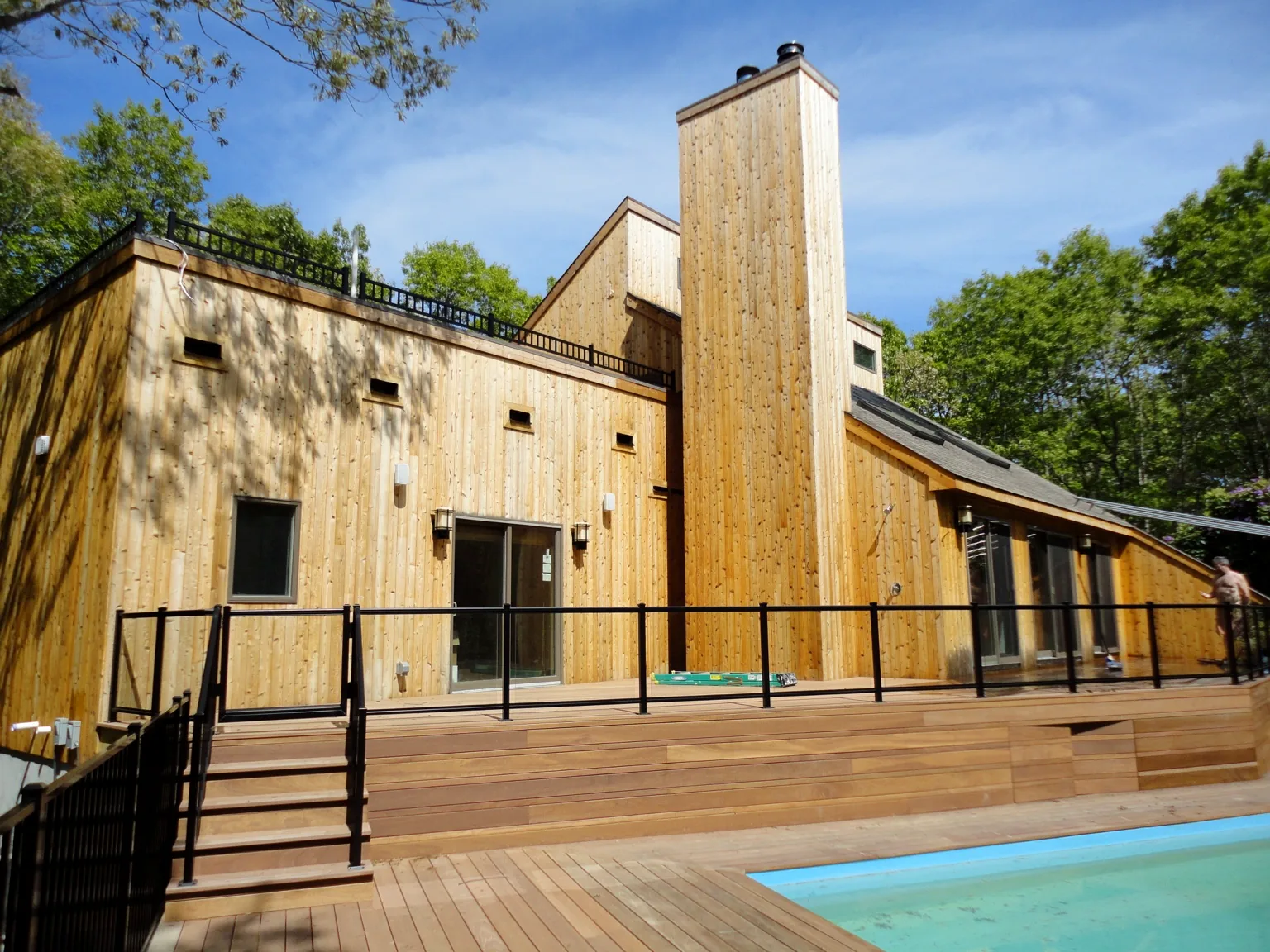
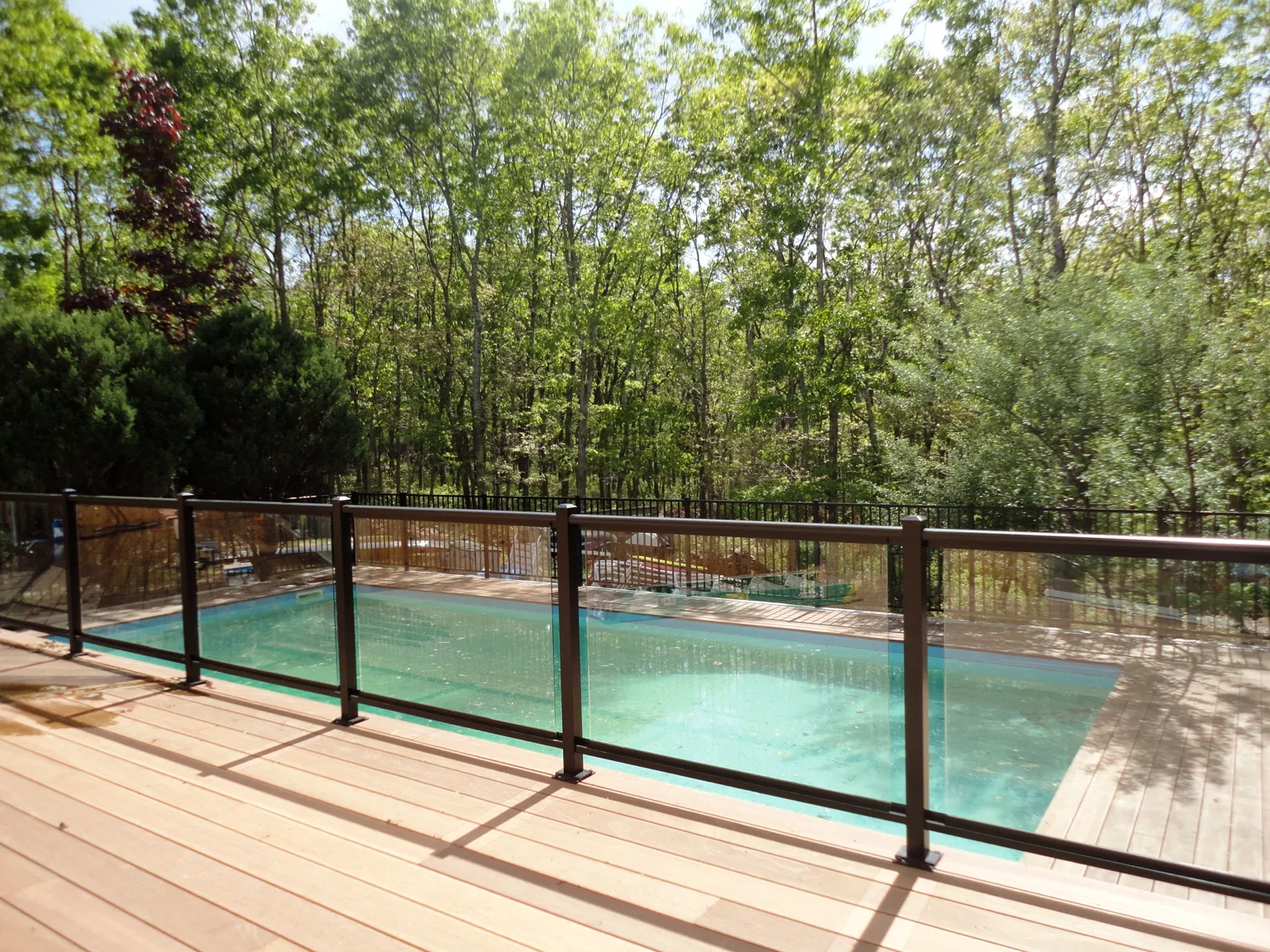
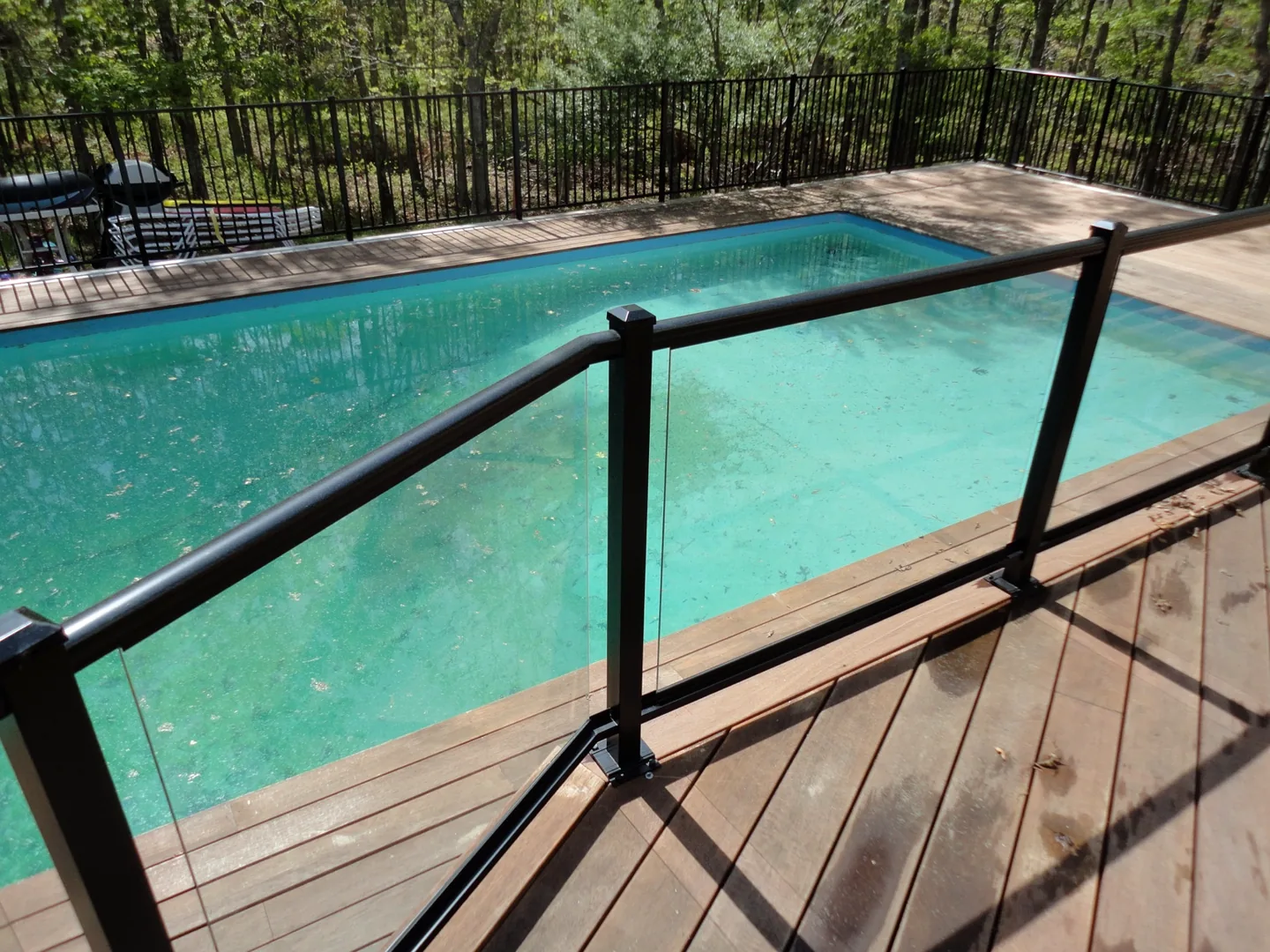
Aluminum-Framed Glass Deck Railing
Aluminum-framed glass railing on an elevated Southampton wood deck, custom manufactured to a precise field layout.
View Complete Project →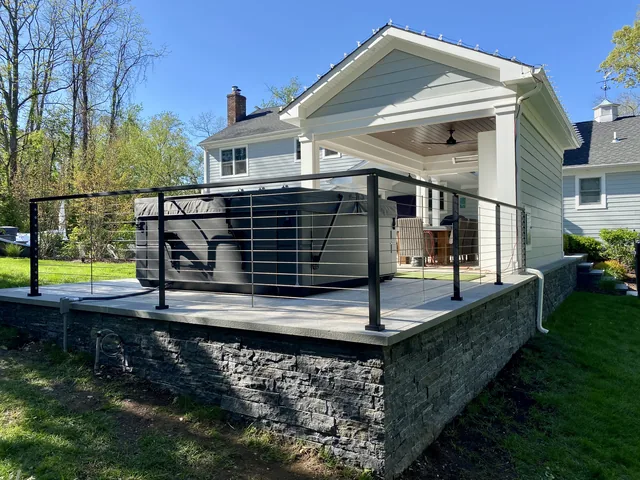
Modern Aluminum Cable Railing
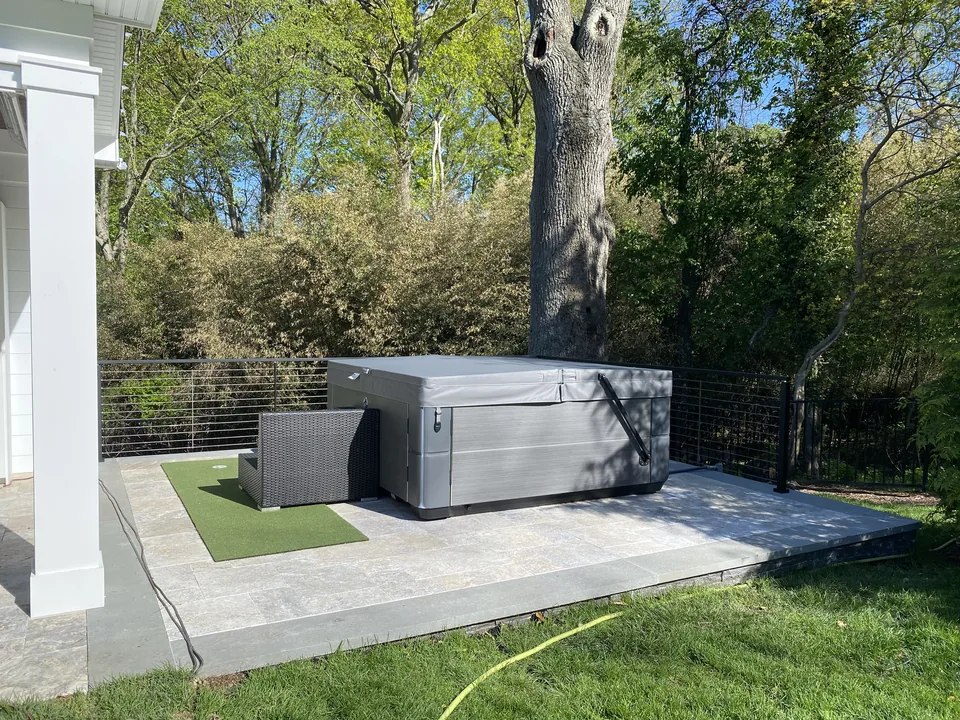
A black aluminum cable railing around a raised spa terrace, built to keep the woods in view.
View Complete Project →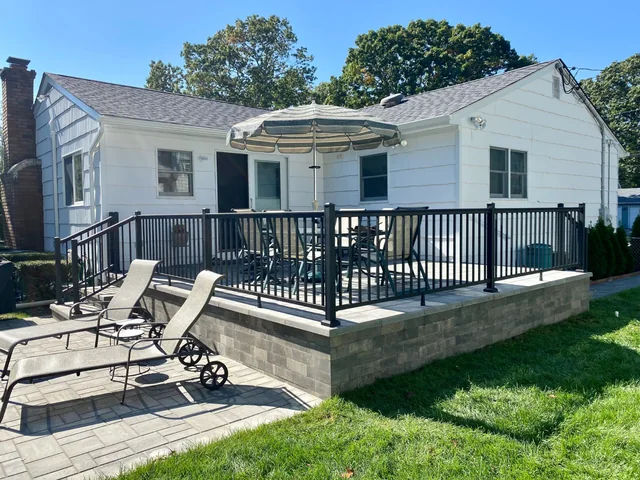
Blackline HHP Fence & Aluminum Railings
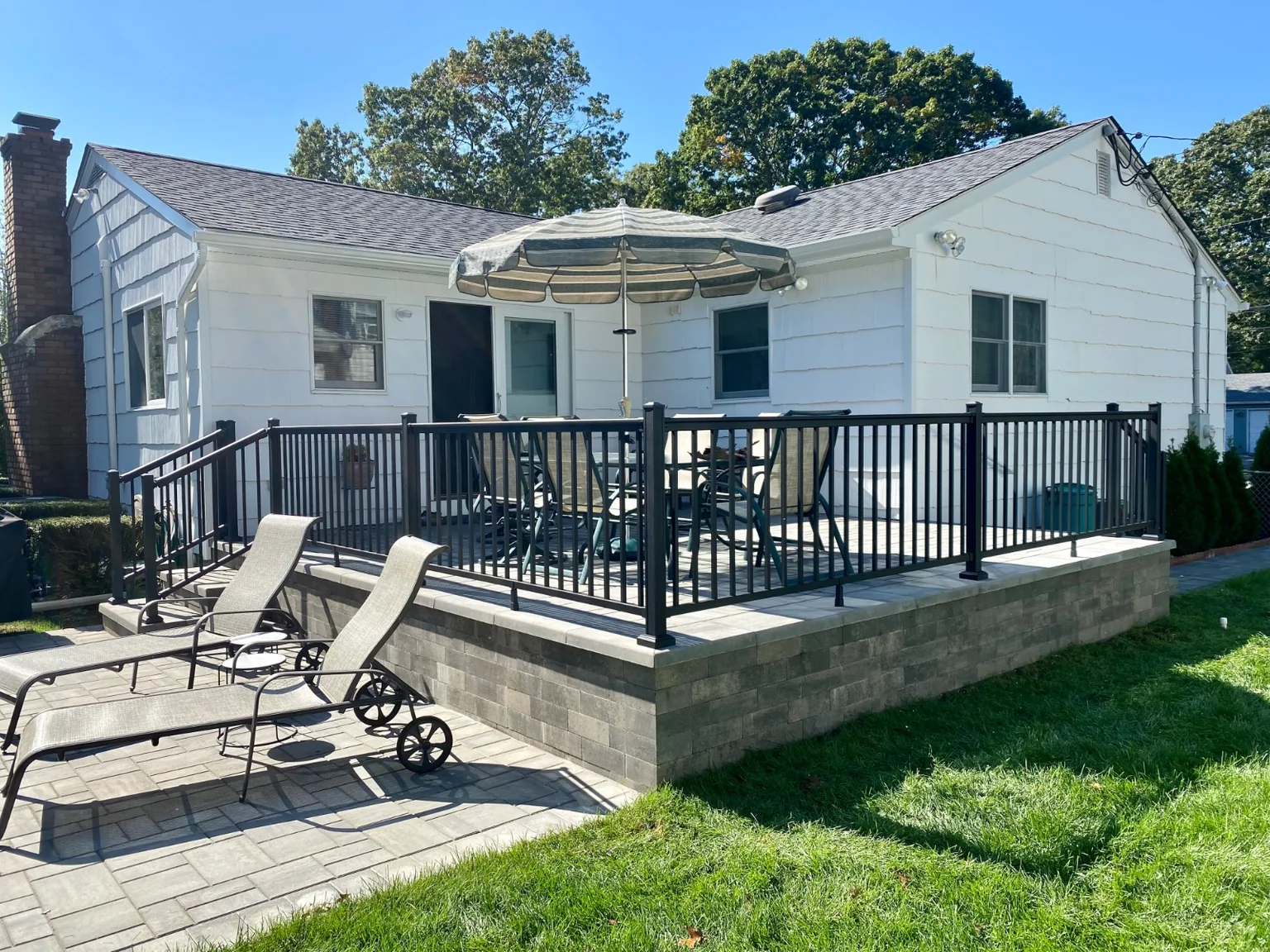
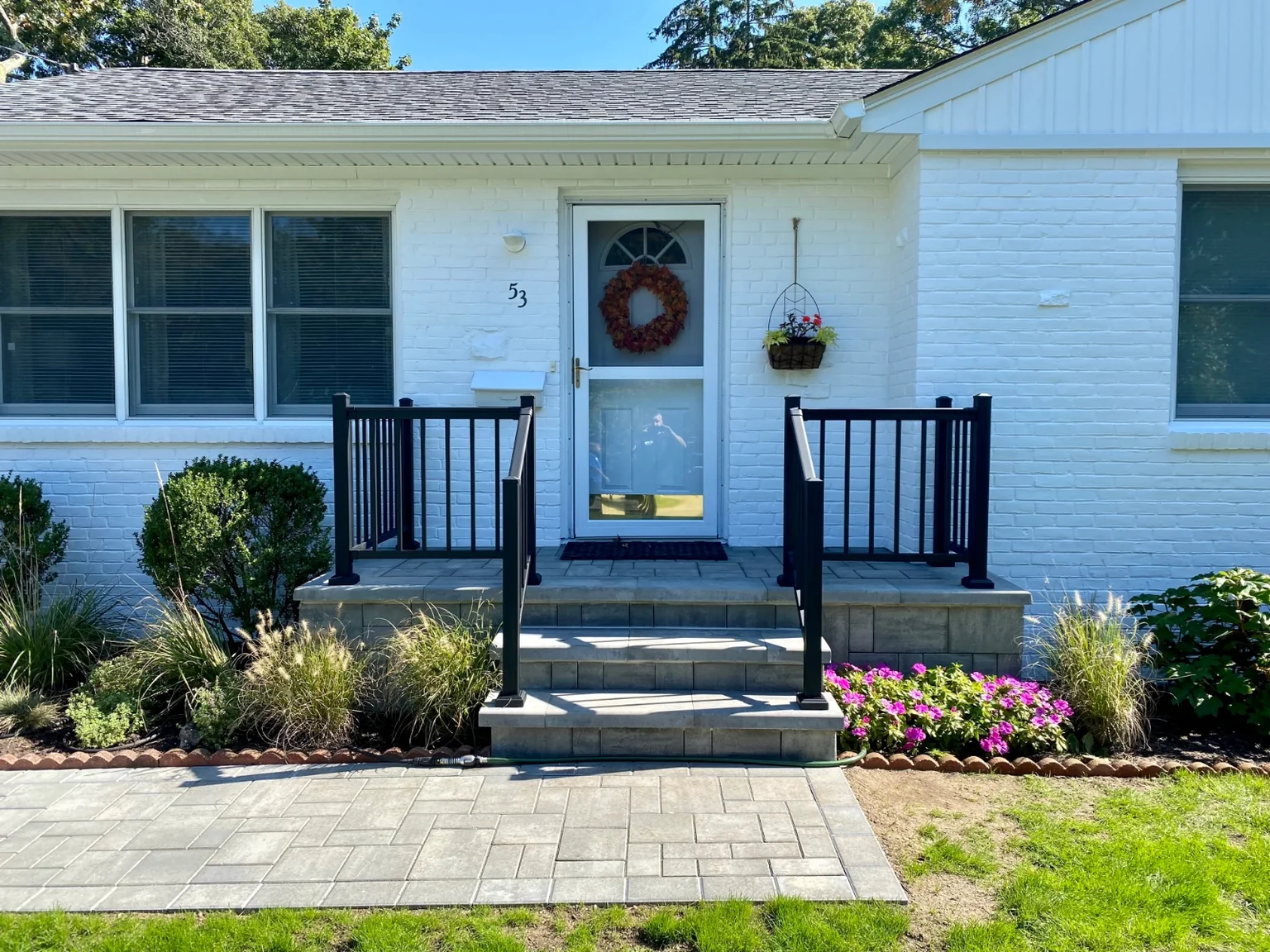
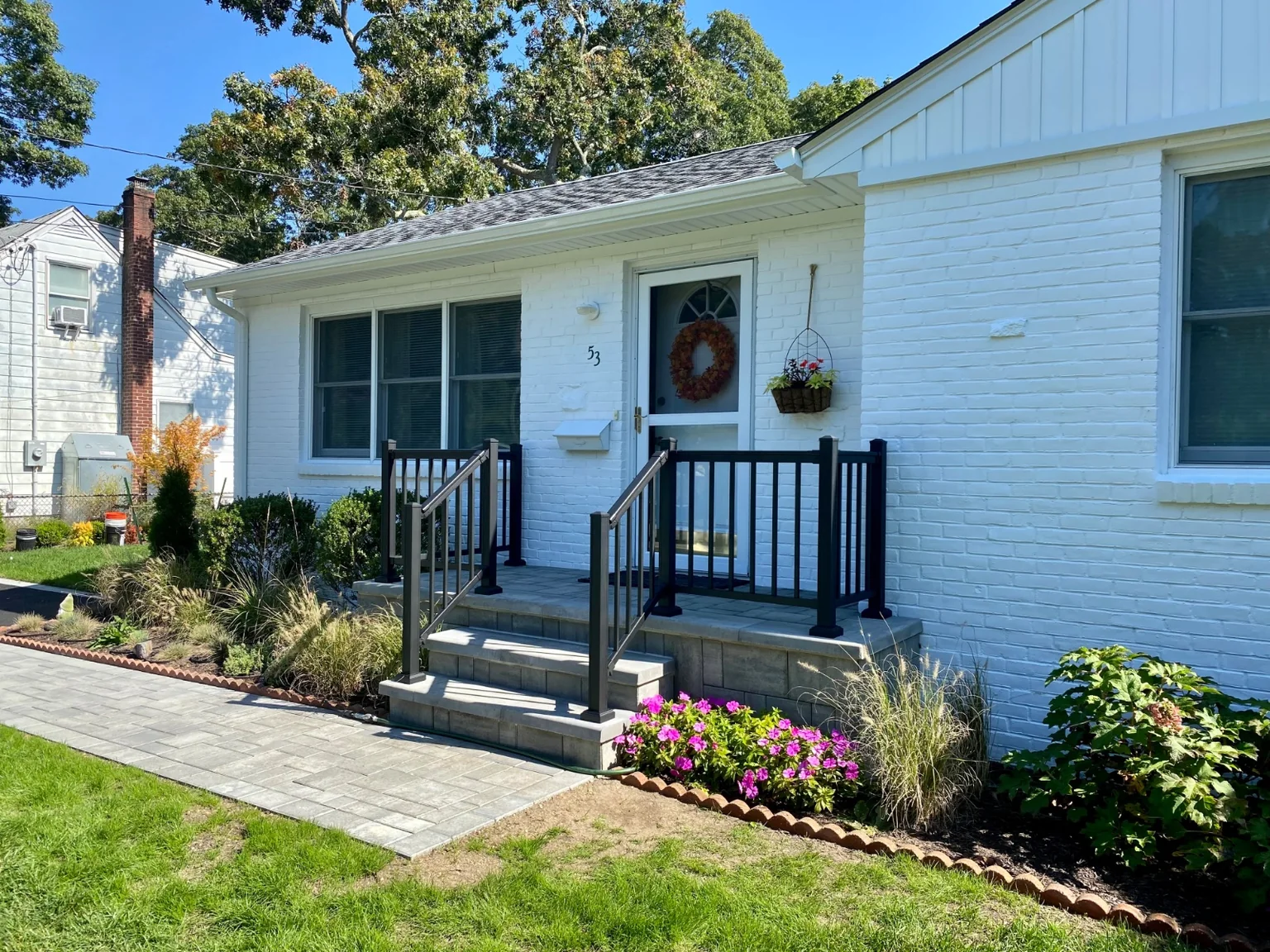
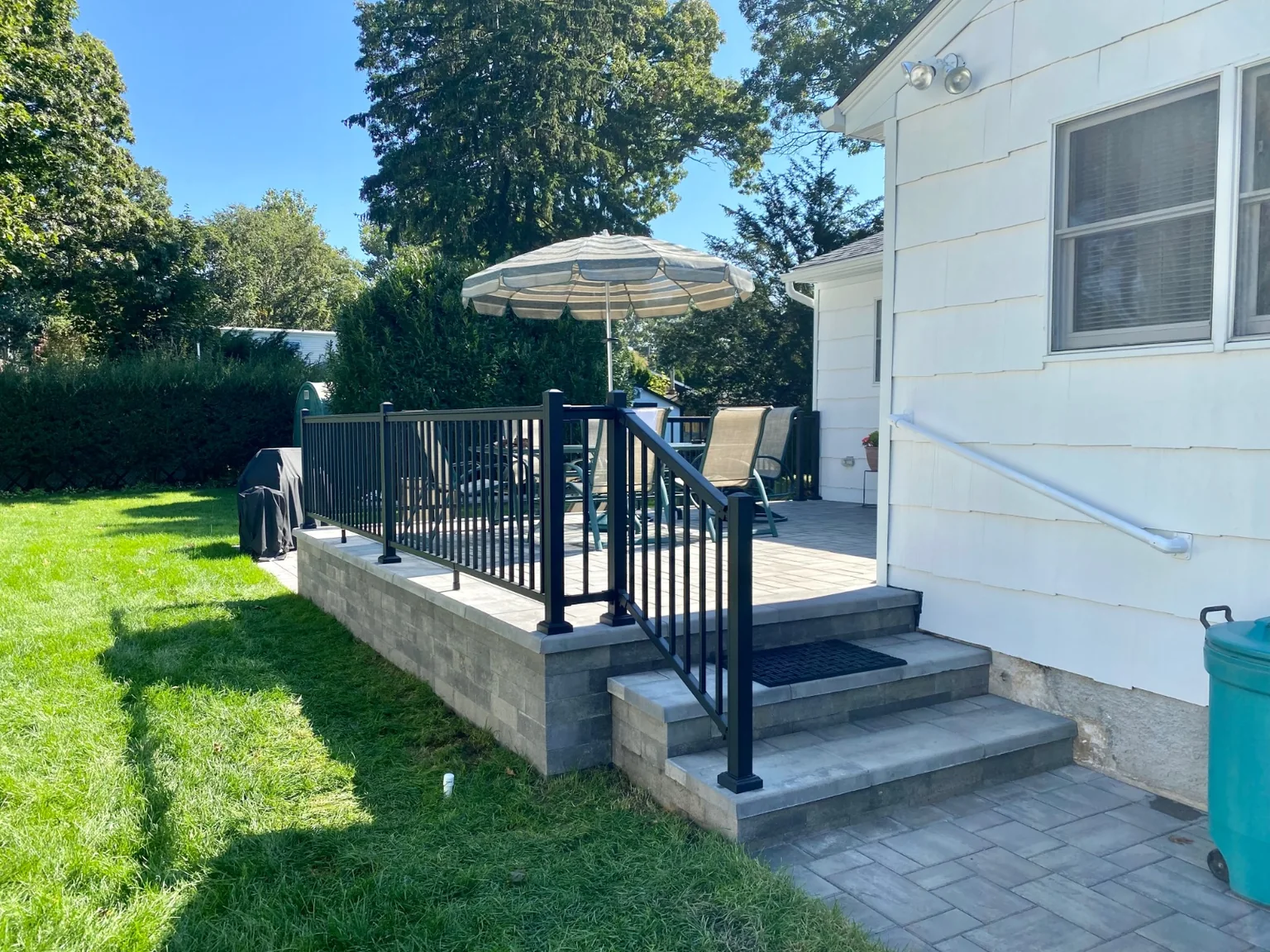
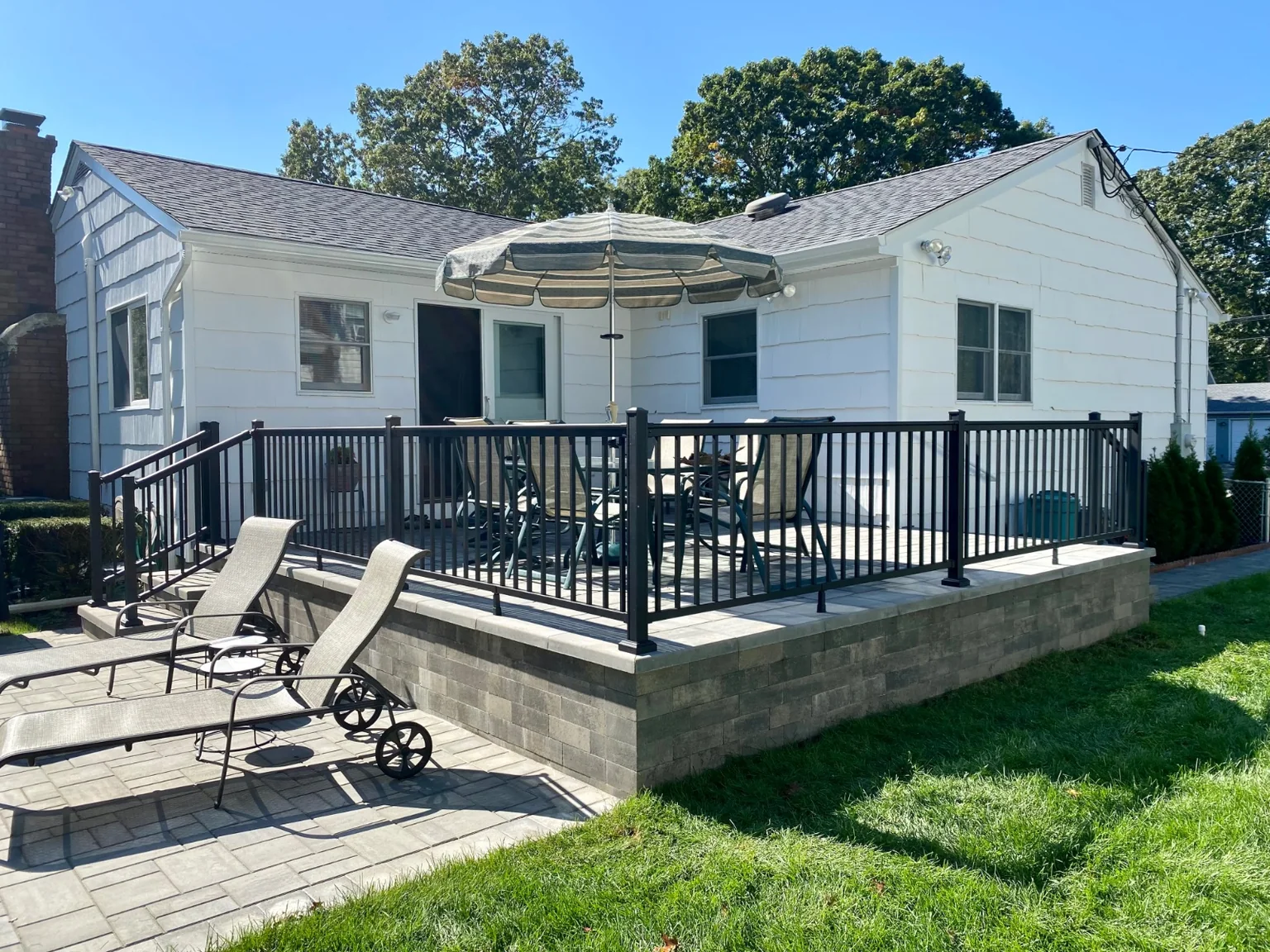
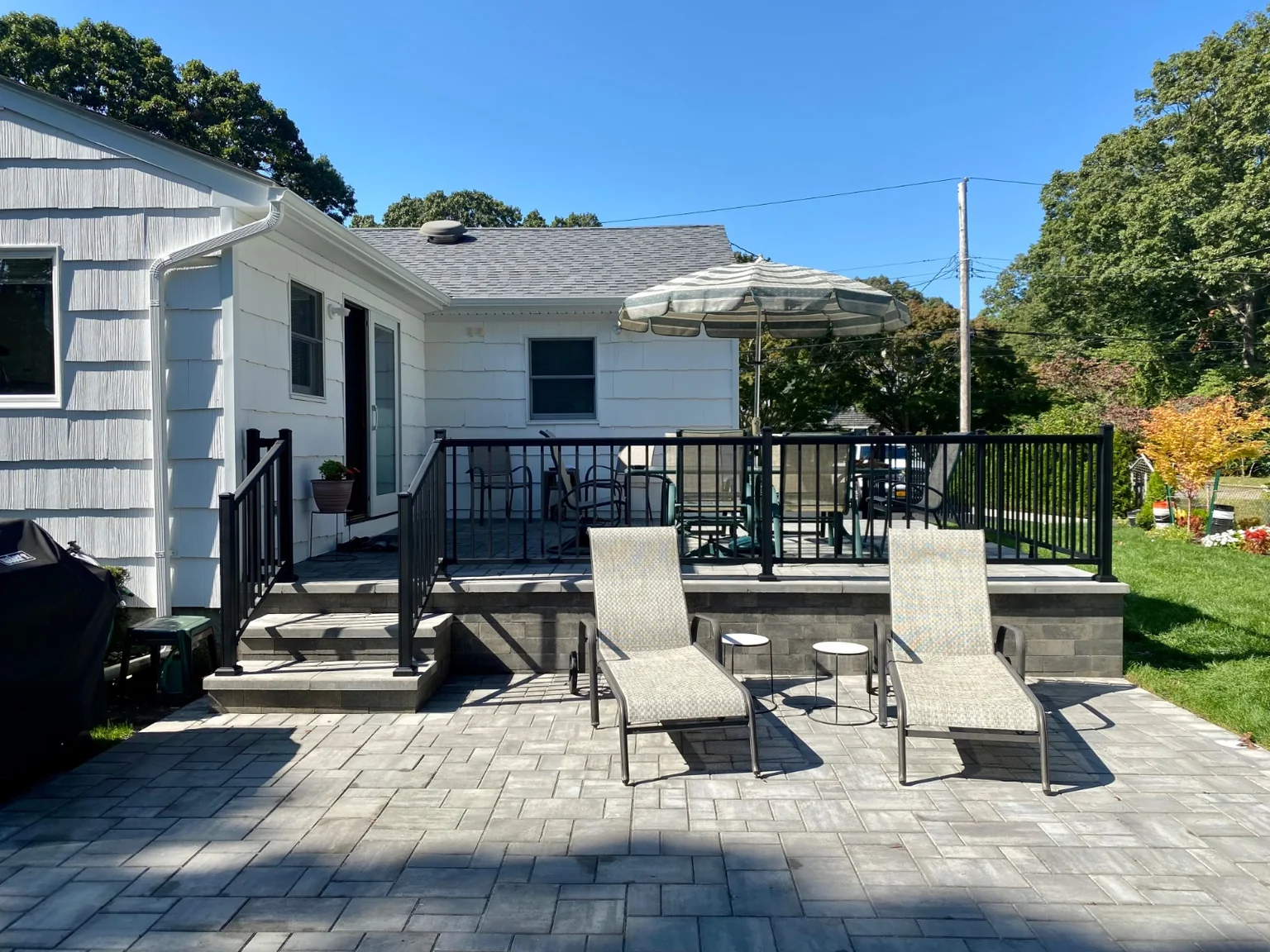
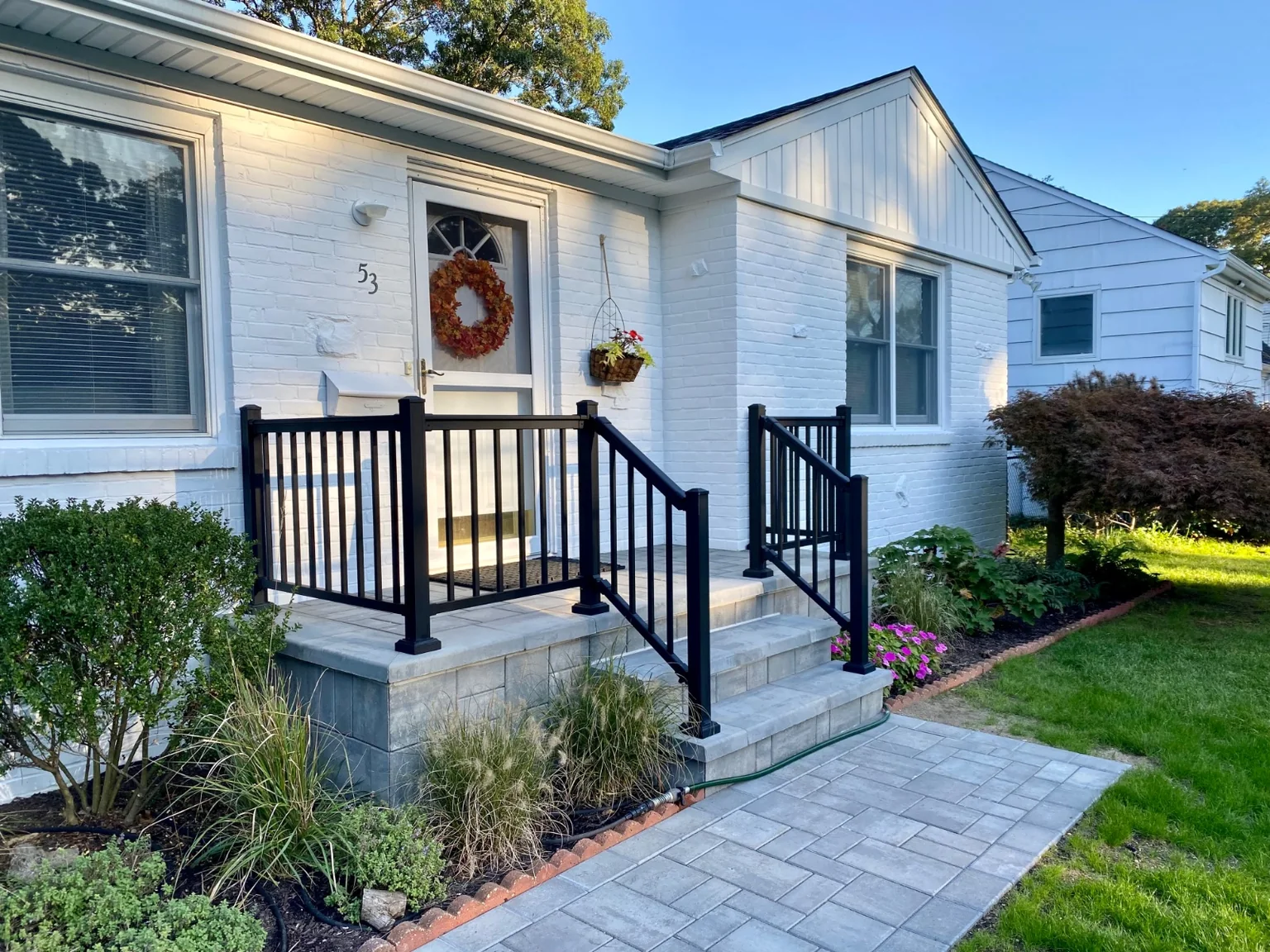
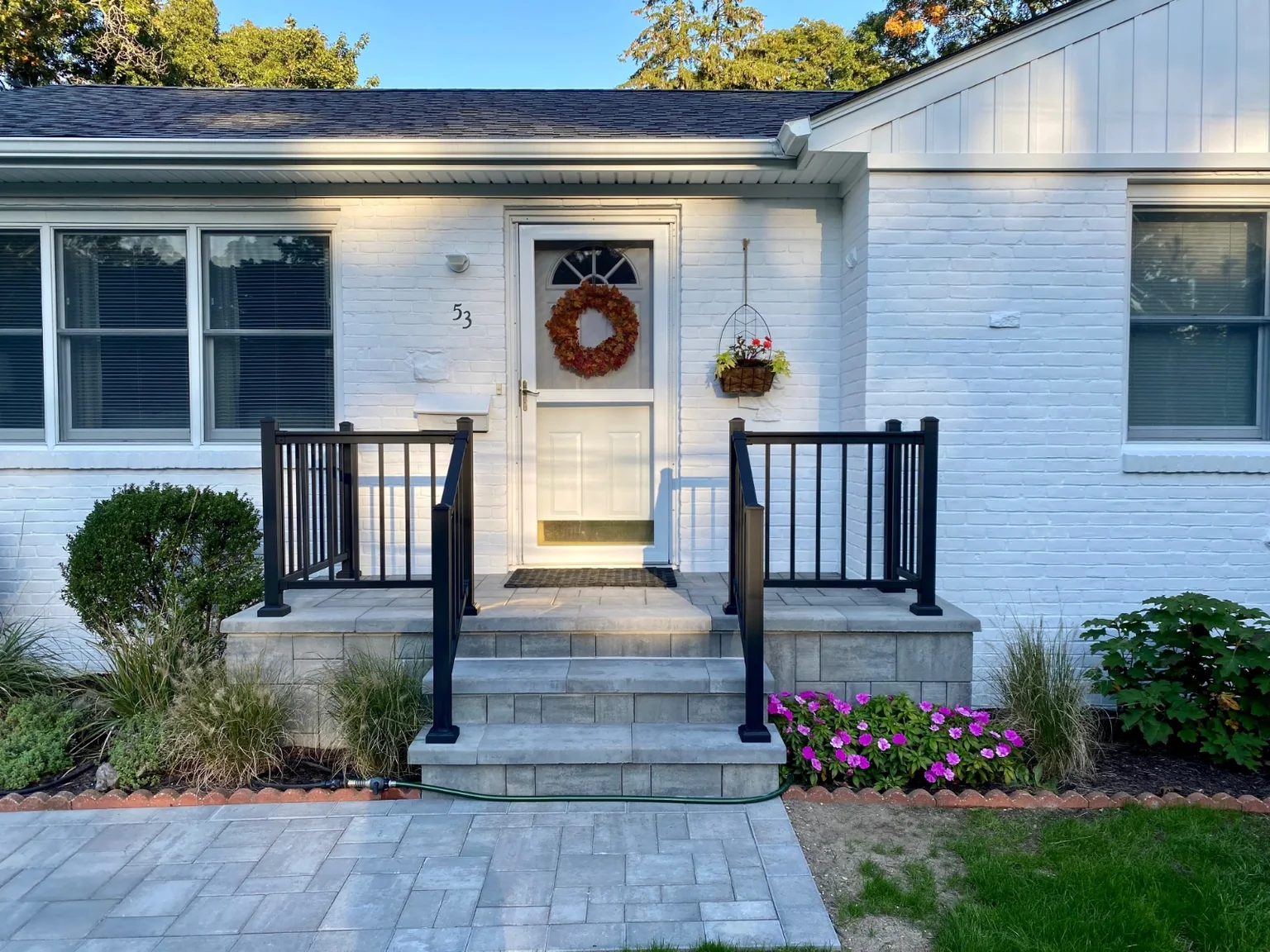
As a larger Bellport exterior project came together, Sunrise added black aluminum railings at the front stoop and raised backyard patio, along with the property’s Blackline HHP fence.
View Complete Project →Reviews from real Sunrise customers
Railing work is detail work. Read verified customer reviews collected through NiceJob about communication, workmanship and the experience of working with Sunrise.
Common questions about outdoor railings
What kinds of outdoor railings do you install?
Cable railing, aluminum railing, and deck, porch and stair railings for residential properties. Most of what we do is around raised patios, terraces, decks and porches — anywhere there is a change in level that needs a guardrail.
Is railing your main business?
No. Fencing is — residential fencing and pool fencing across Suffolk County since 1992. Railings are a real part of what we do, but a smaller one. We take them on where the work suits how we build, and we would rather be straight about that than overstate it.
Do you install commercial railing systems?
No. Our railing work is residential. For commercial guardrail packages you want a contractor who specialises in that.
Which railing style should I choose?
It usually comes down to the view. If you have one worth keeping — woods, water, a landscaped yard — cable railing preserves it better than anything else. If the railing is more about defining an edge than seeing through it, aluminum is simpler and costs less. We will tell you which one your property actually calls for.
Do railings need to meet code?
Yes. Residential guardrails have requirements for height, the load the rail must resist, and the spacing between members. Those get confirmed before anything is fabricated, not adjusted afterwards.