
Property Boundaries
The most common use. An open fence that establishes the line without walling anything off, and reads correctly on larger properties where a solid fence would look wrong.
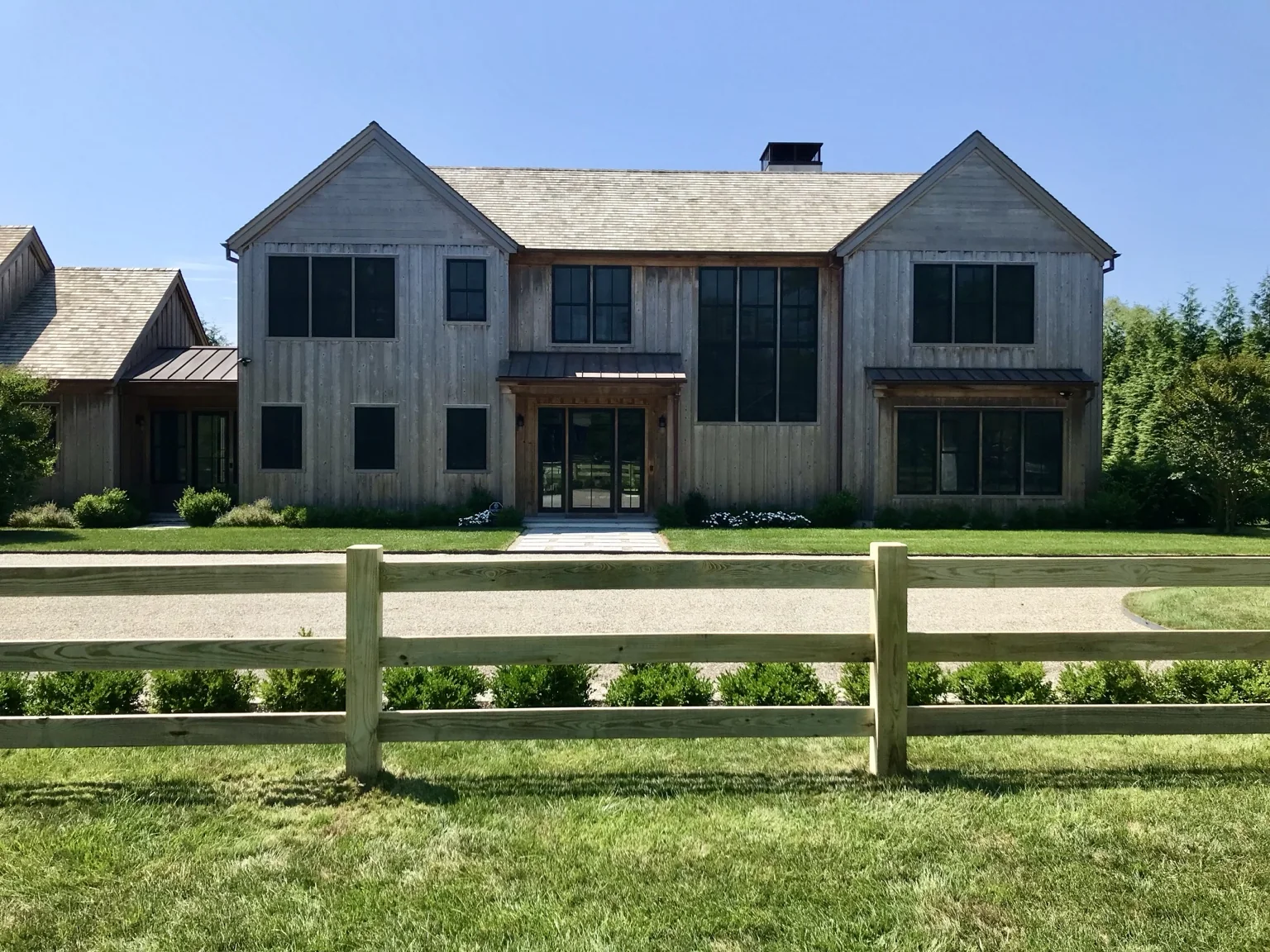
Traditional and custom post-and-rail and board systems, with or without wire, built to suit the property and what the fence actually has to do.
Post and rail and board fencing covers a wide range of construction. Two, three or four rails. Boards run flat or set on edge. Rails face-mounted or mortised through the post. Wire behind it or nothing at all. They all get called the same thing, and they are not the same fence.
The most common use. An open fence that establishes the line without walling anything off, and reads correctly on larger properties where a solid fence would look wrong.
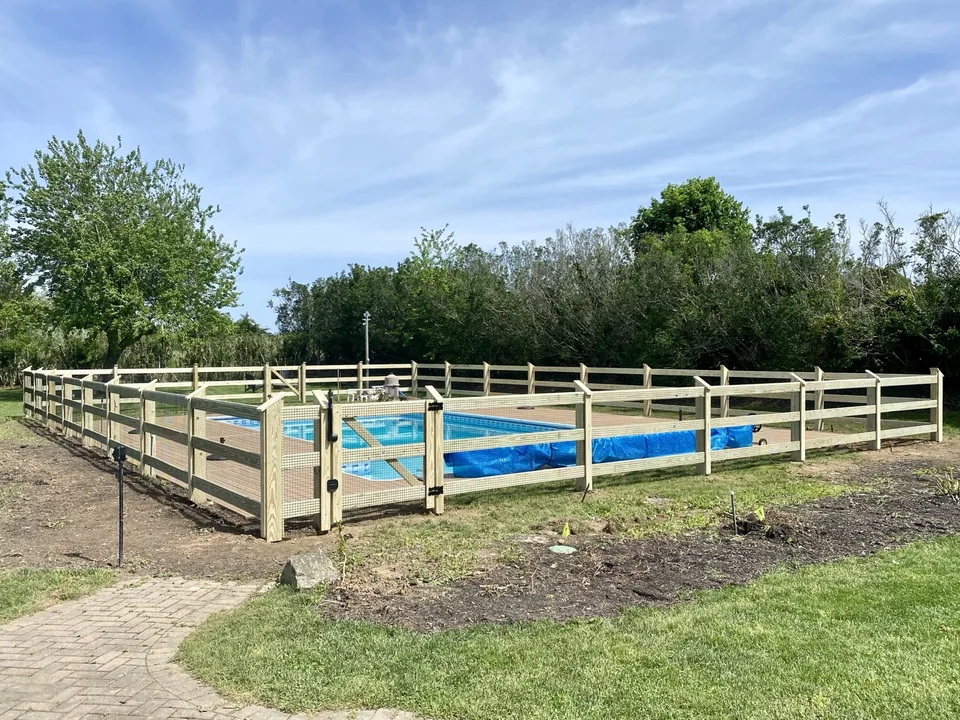
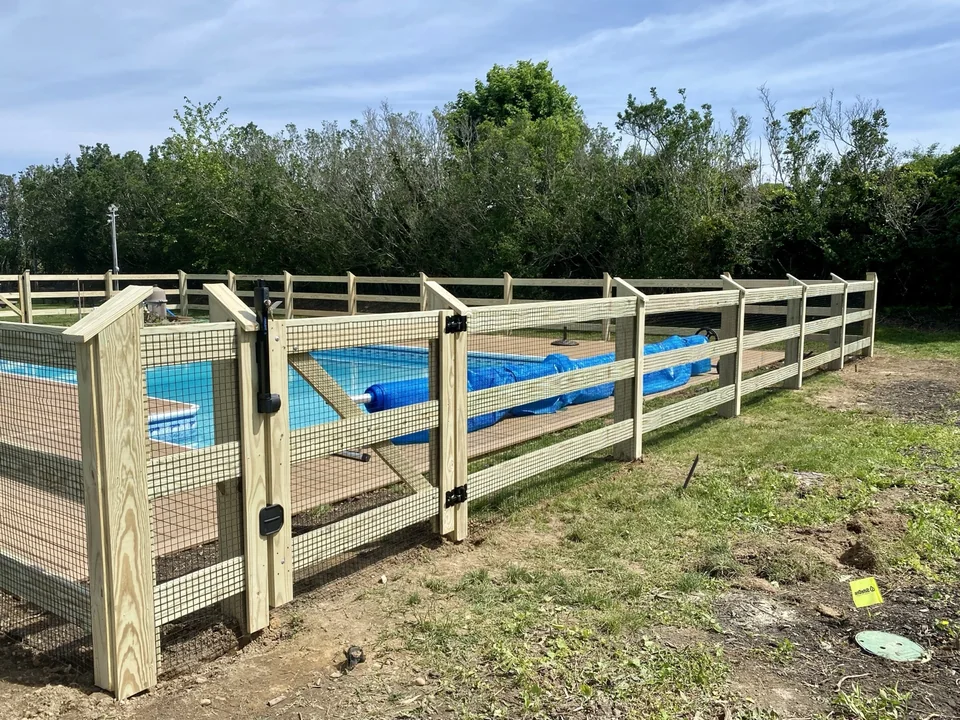
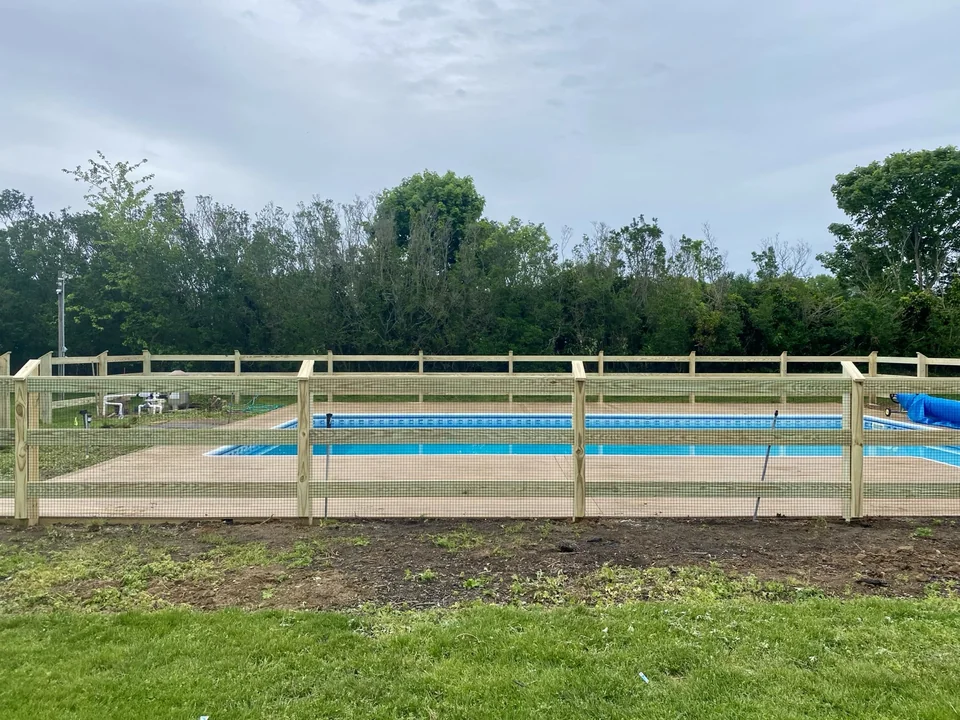
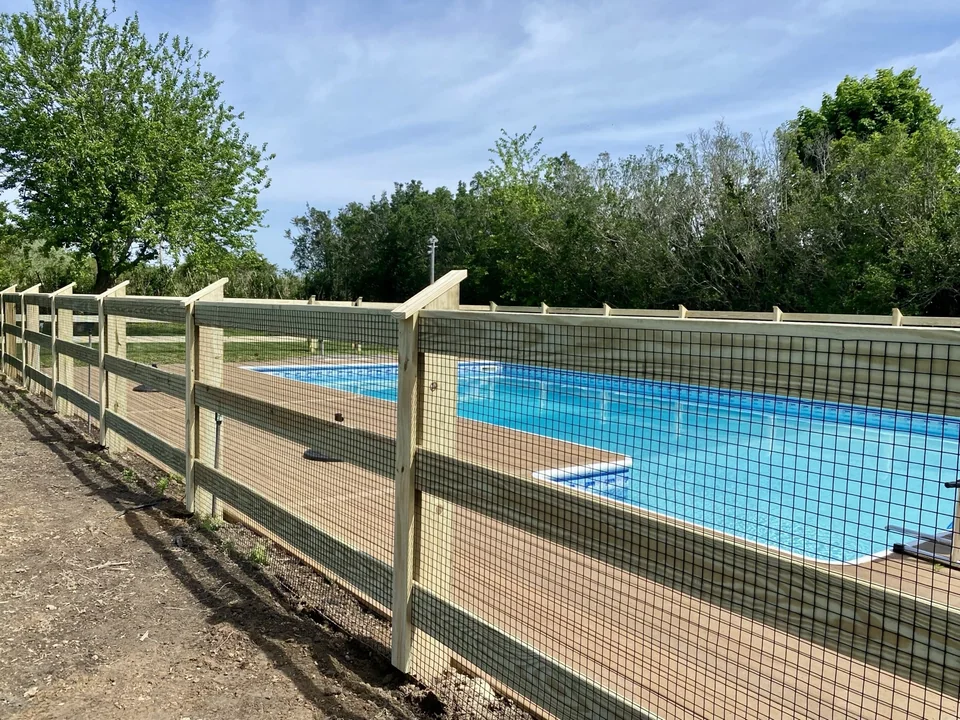
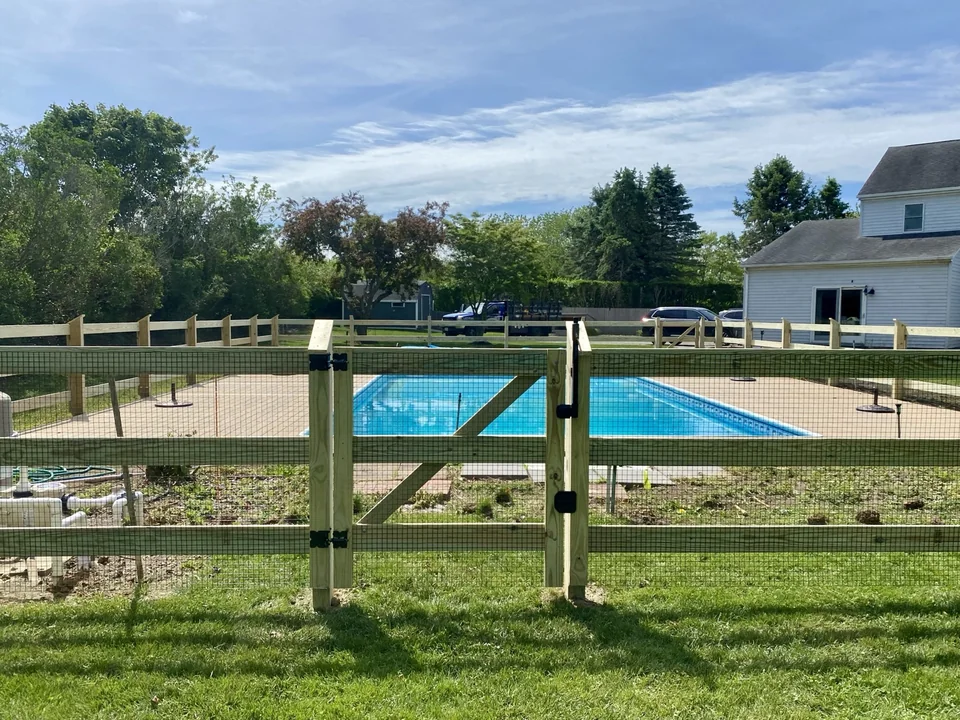
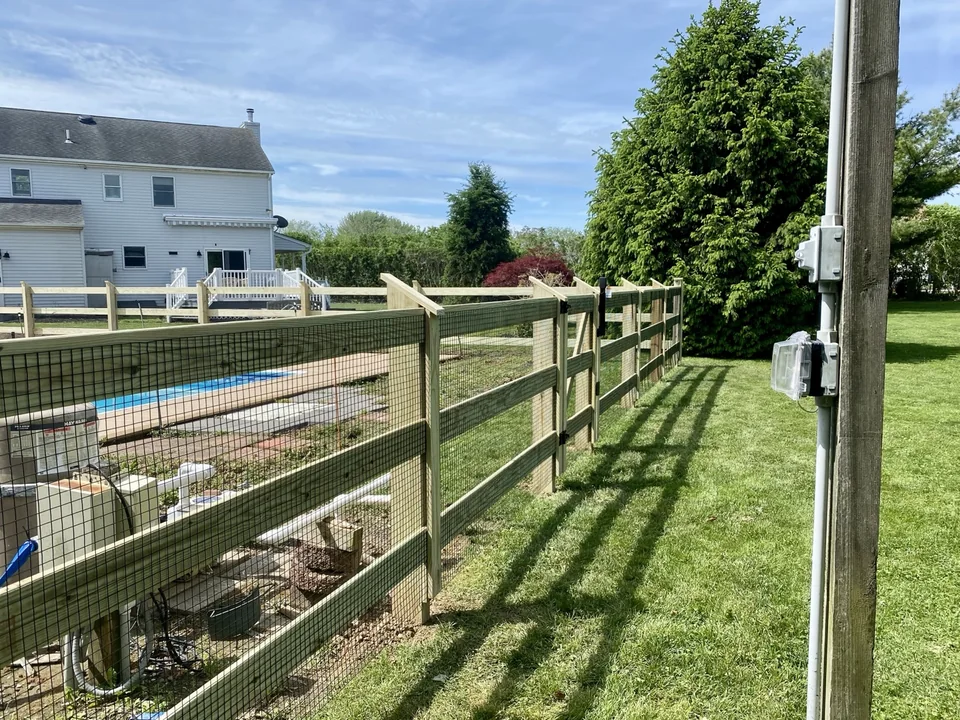
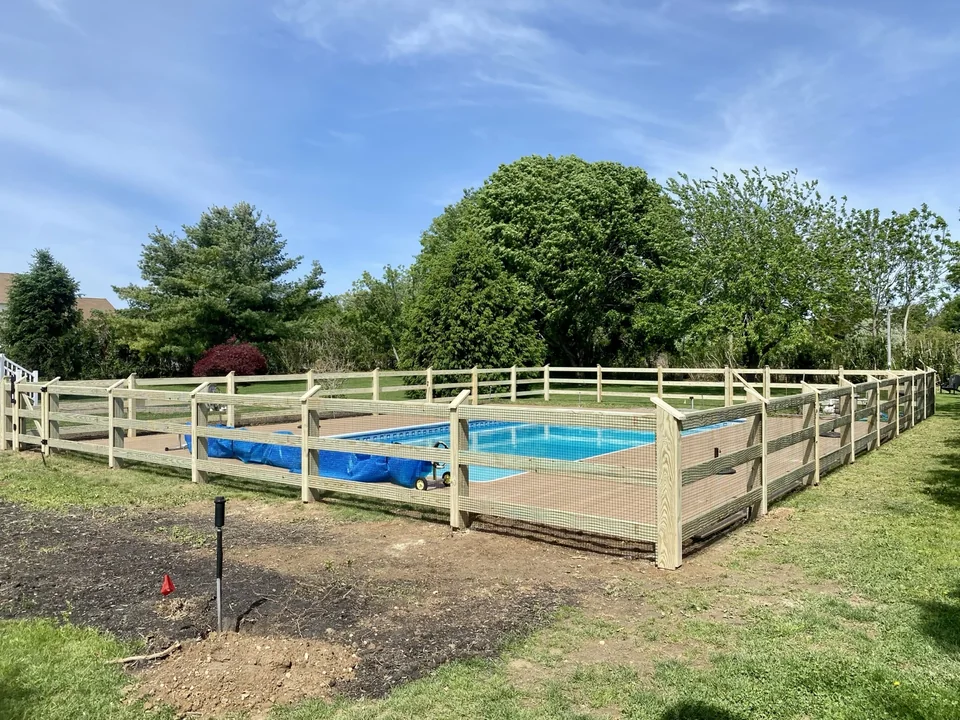
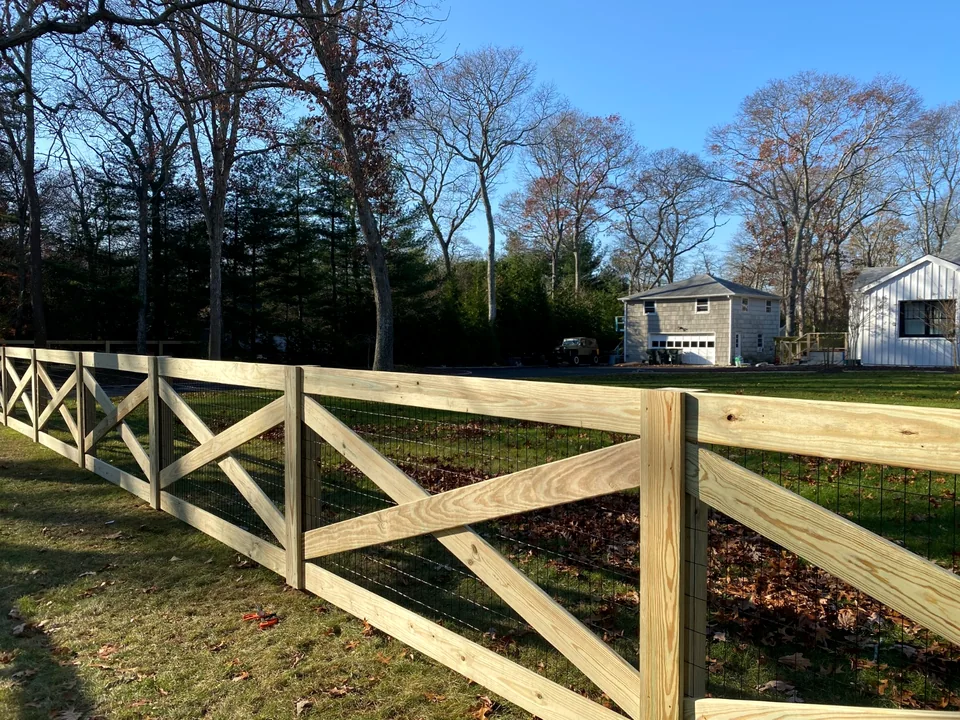
Welded wire behind the rails turns an open fence into a barrier that will hold dogs, keep children in, or meet a pool-barrier requirement. From a distance the wire disappears and the fence still reads as post and rail.
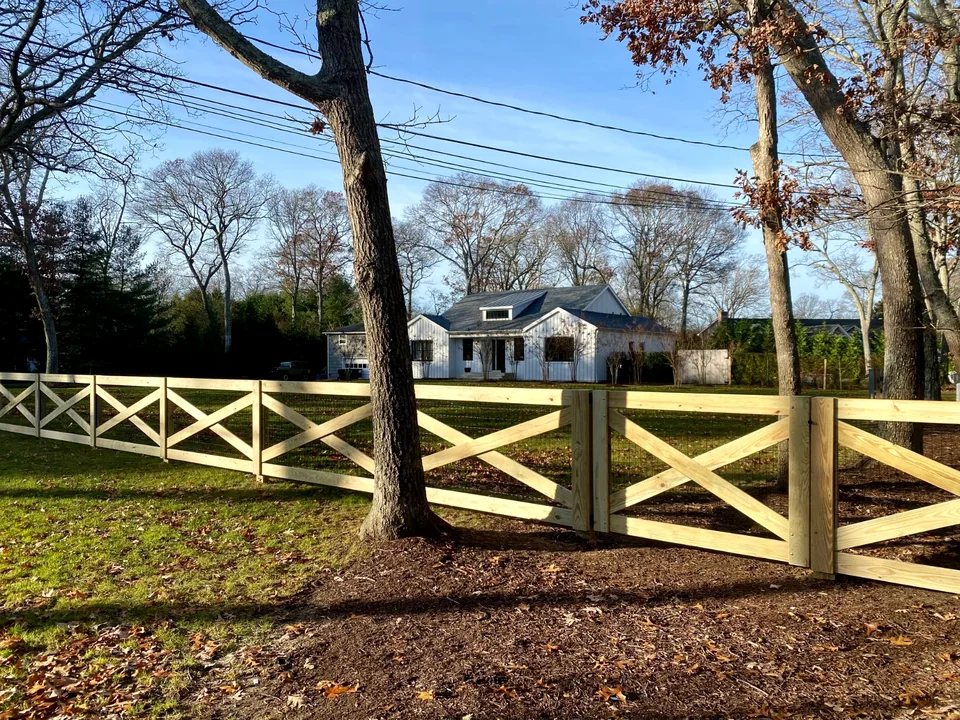
Stock post and rail comes in fixed sizes with rails fixed to the face of the post. Where the property warrants it we build the fence instead — heavier posts, rails mortised through them, detailing at the post tops. The Remsenburg fence was built that way: pressure-treated, 6x6 posts, mortised, rounded post tops.
Real Sunrise installations showing custom crossbuck work, traditional board fencing, split rail, round cedar, gates, wire infill and changing grades. Tap a card to see the rest of that job.


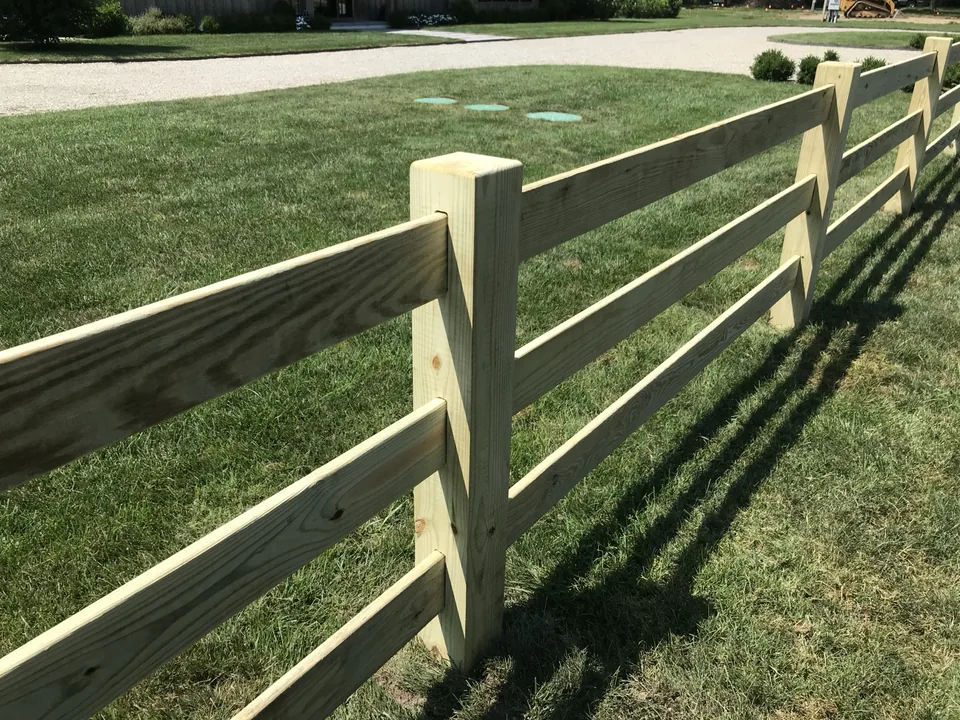
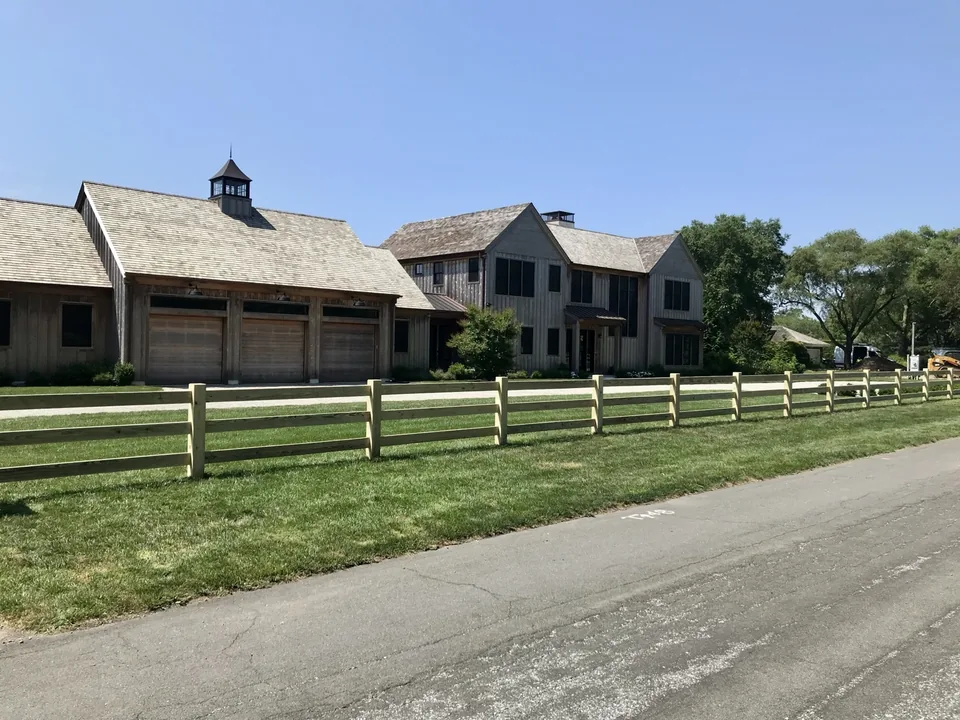
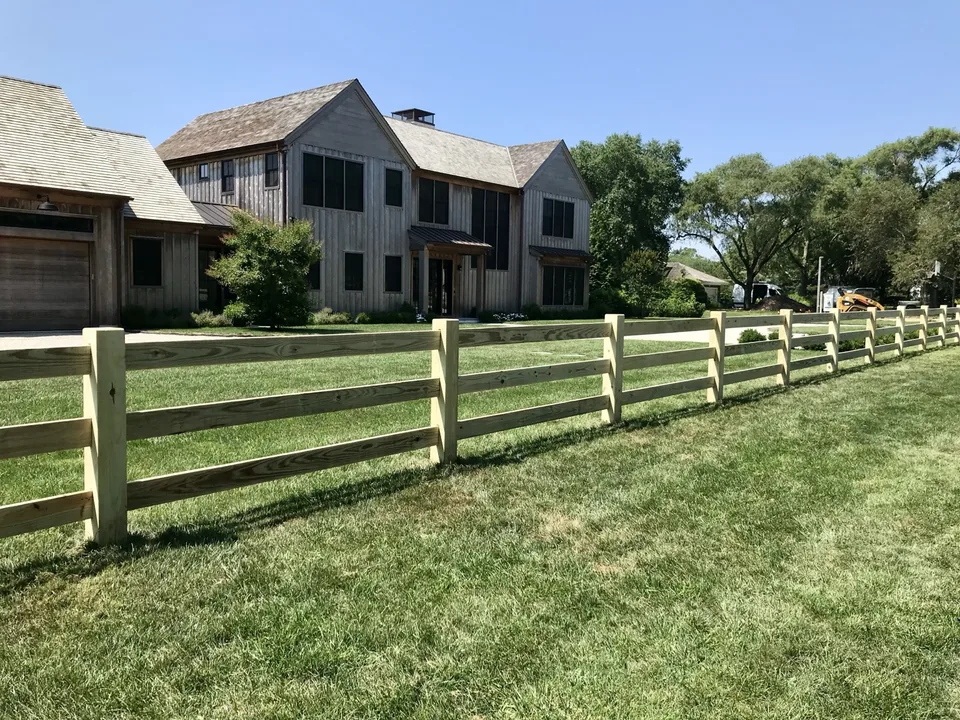
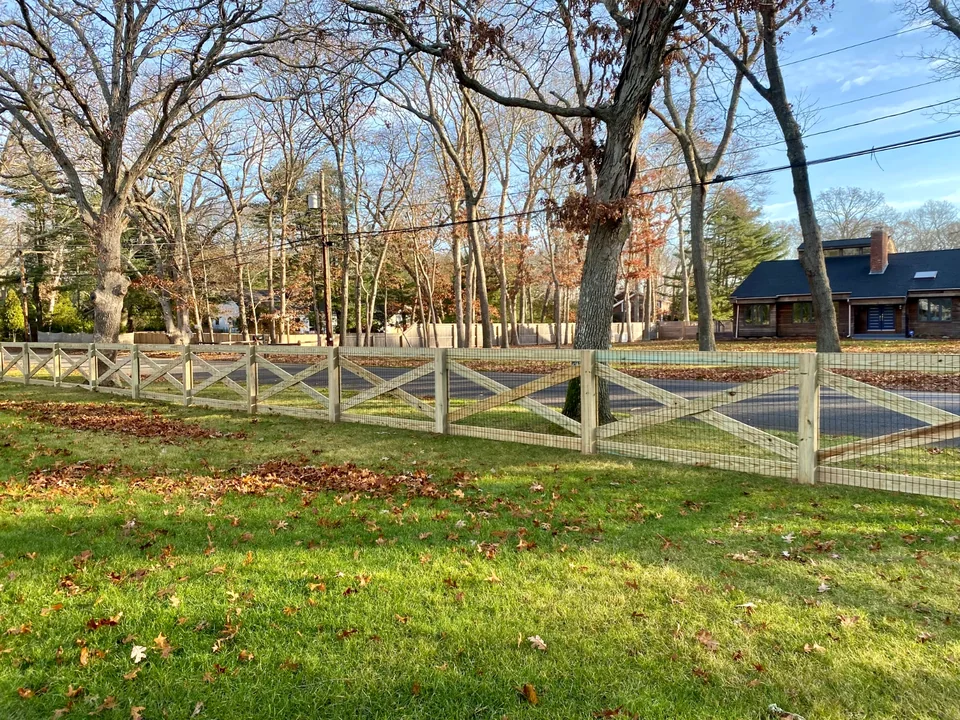
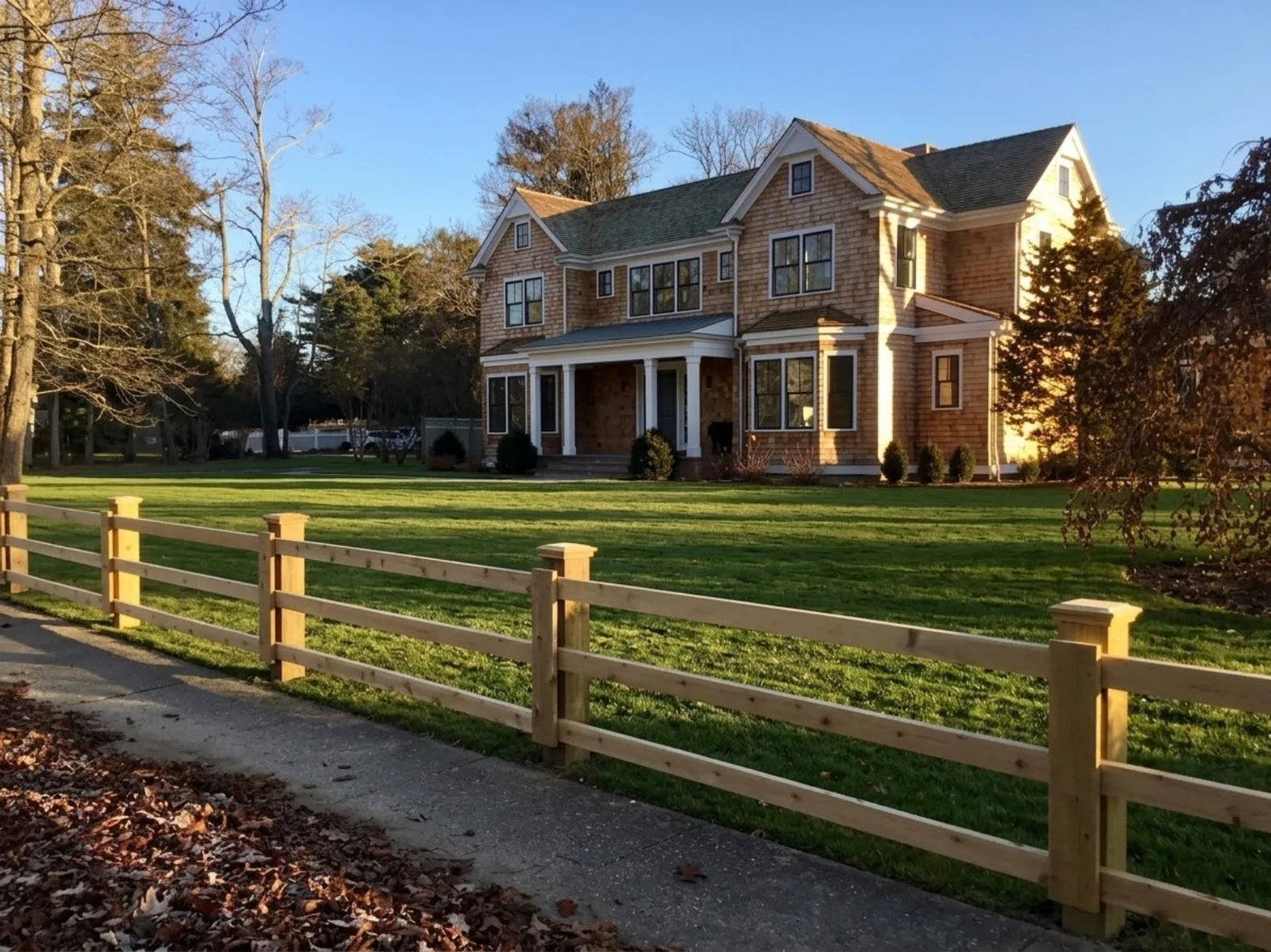


See post and rail and board fencing we've built on real Suffolk County properties.
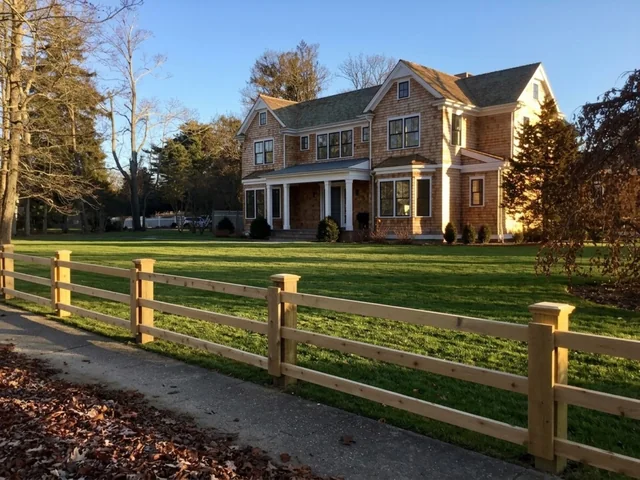
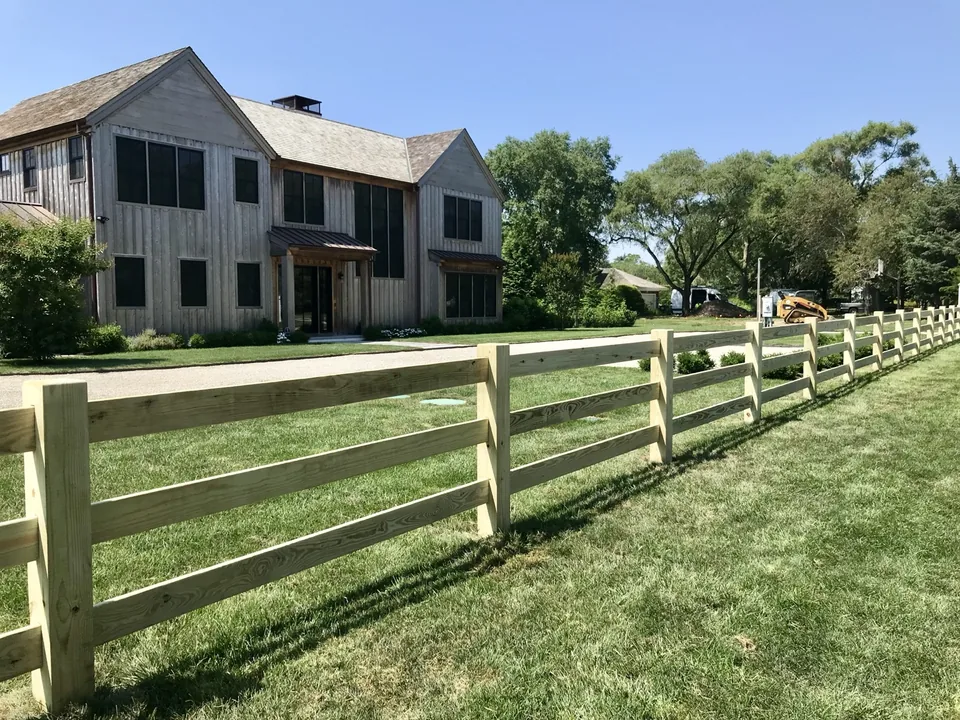
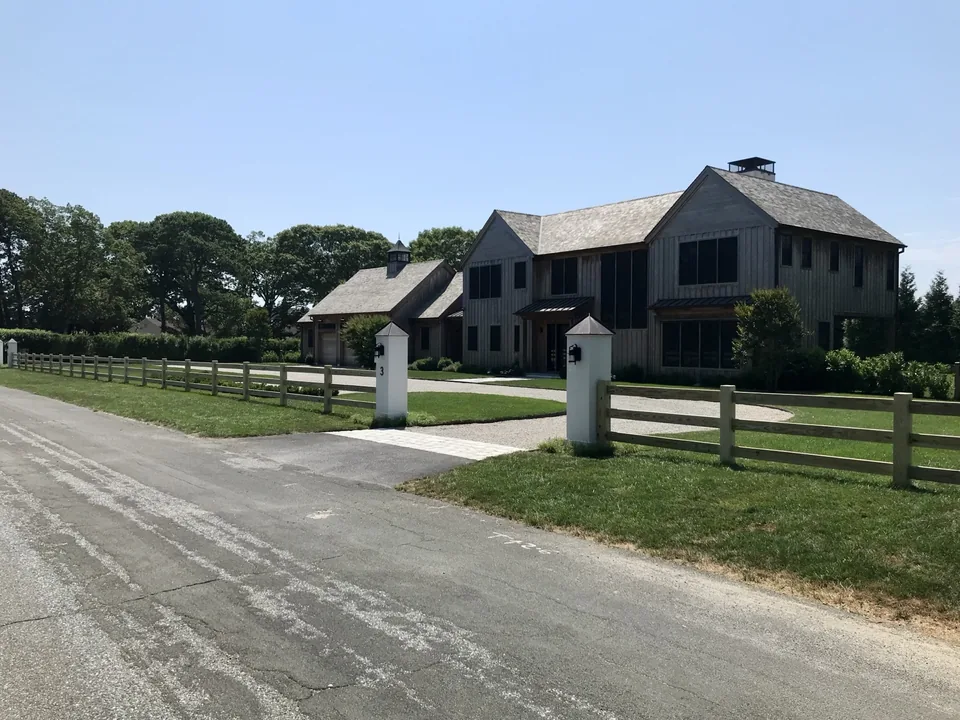
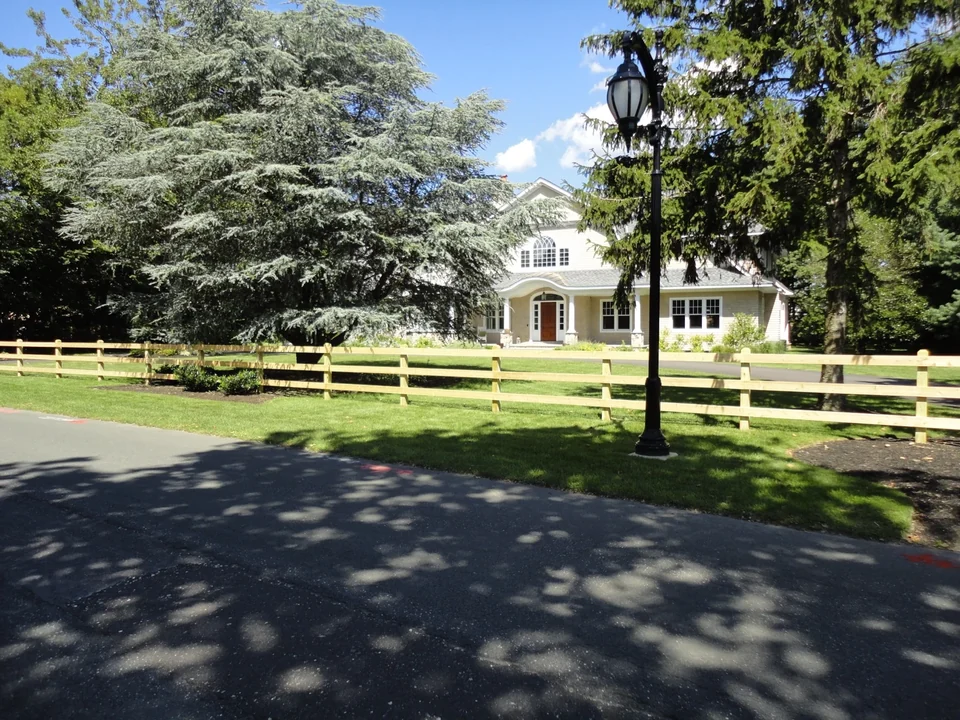
A repeat-client design using 6×6 pressure-treated posts with cedar rails, fascia boards and cedar post caps.
View Complete Project →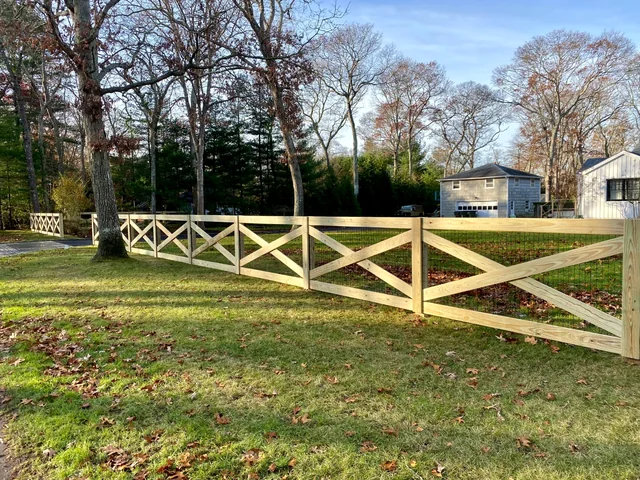
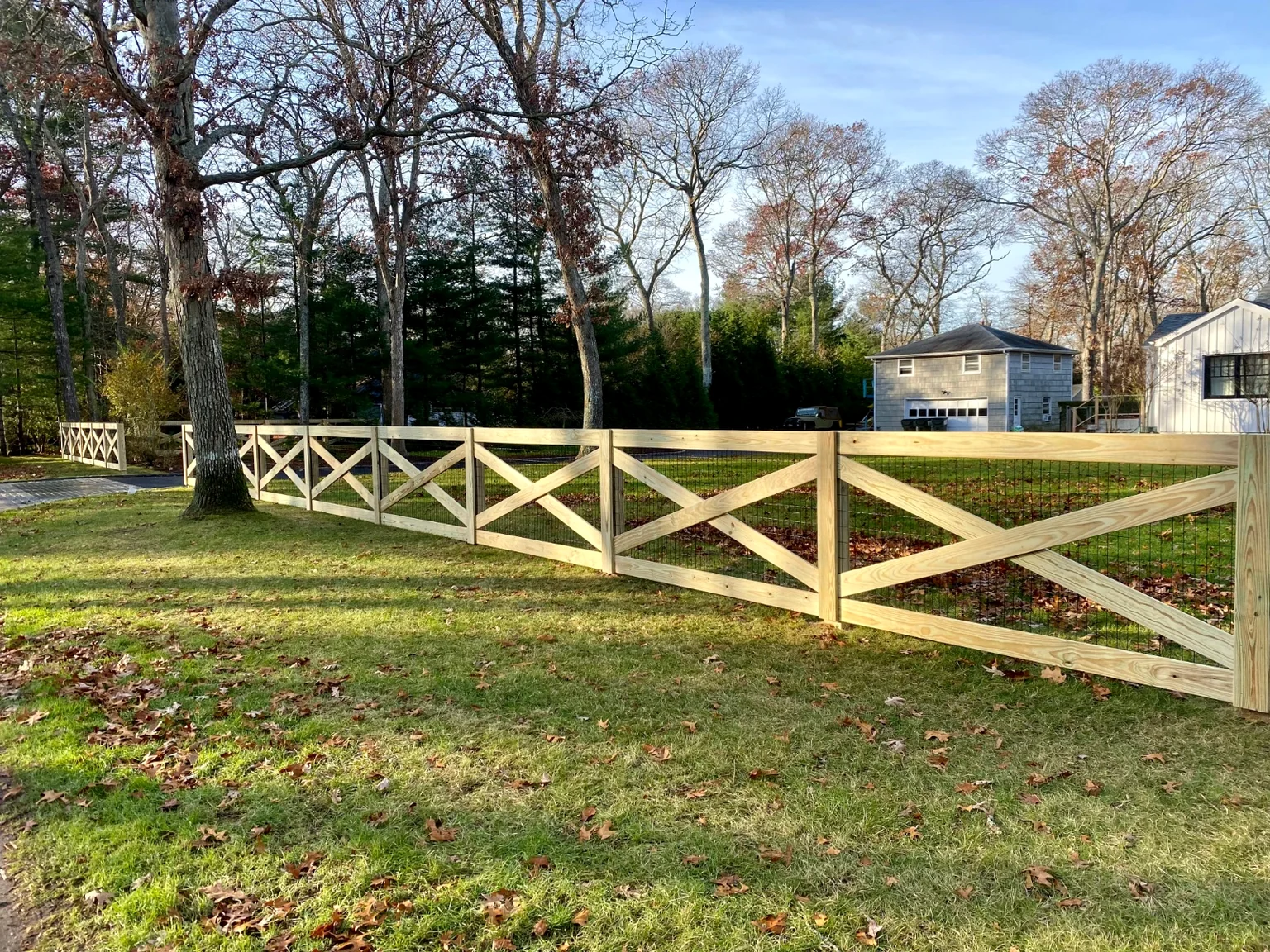
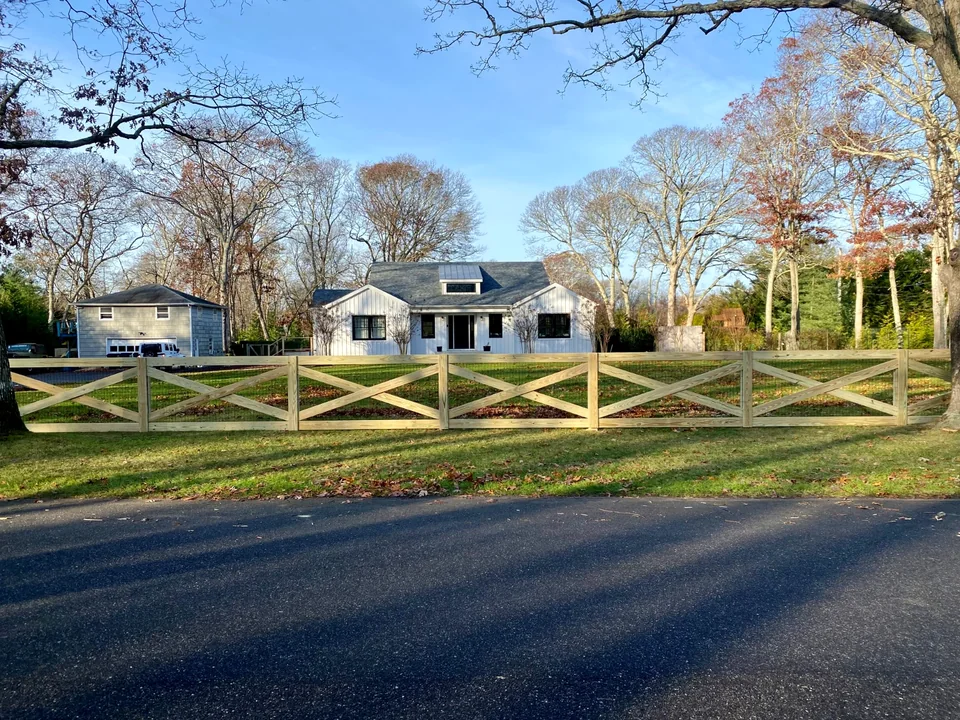
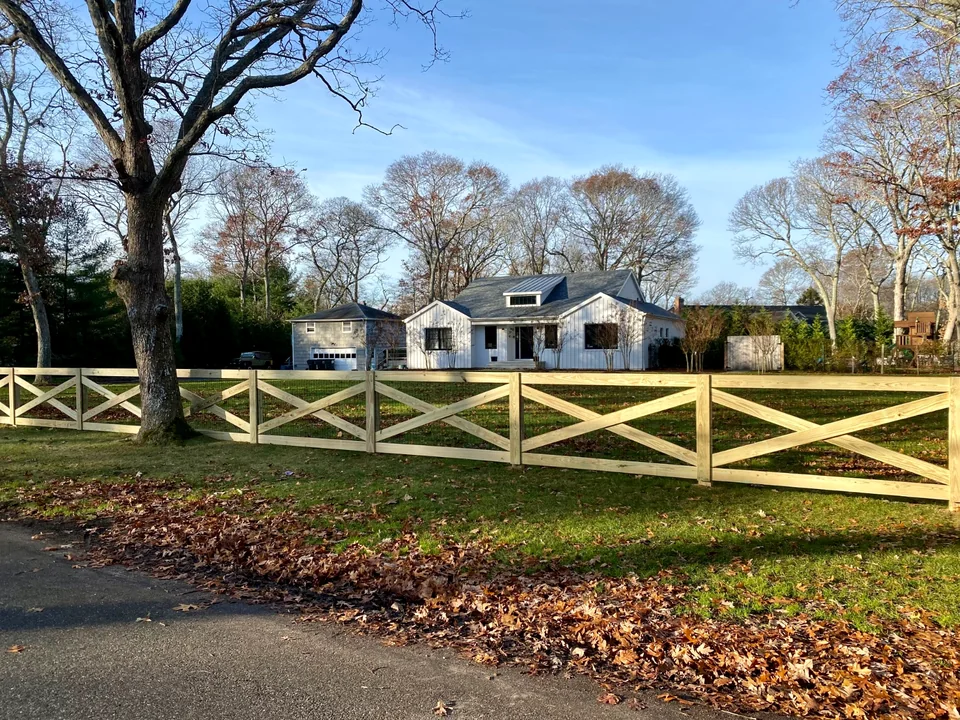
A custom open fence built with repeating crossbuck sections and dark wire infill across a Westhampton property.
View Complete Project →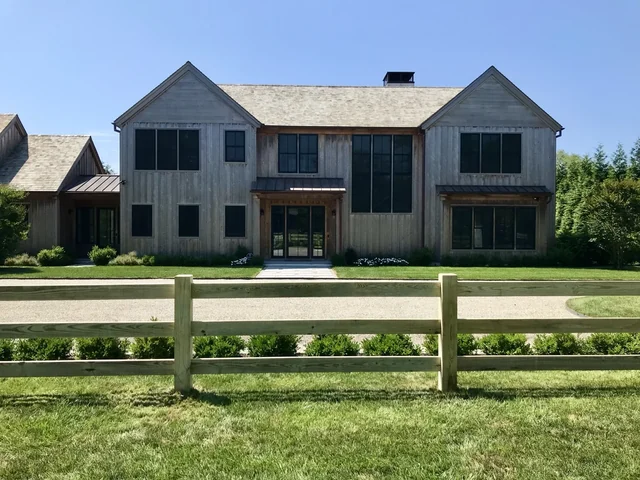
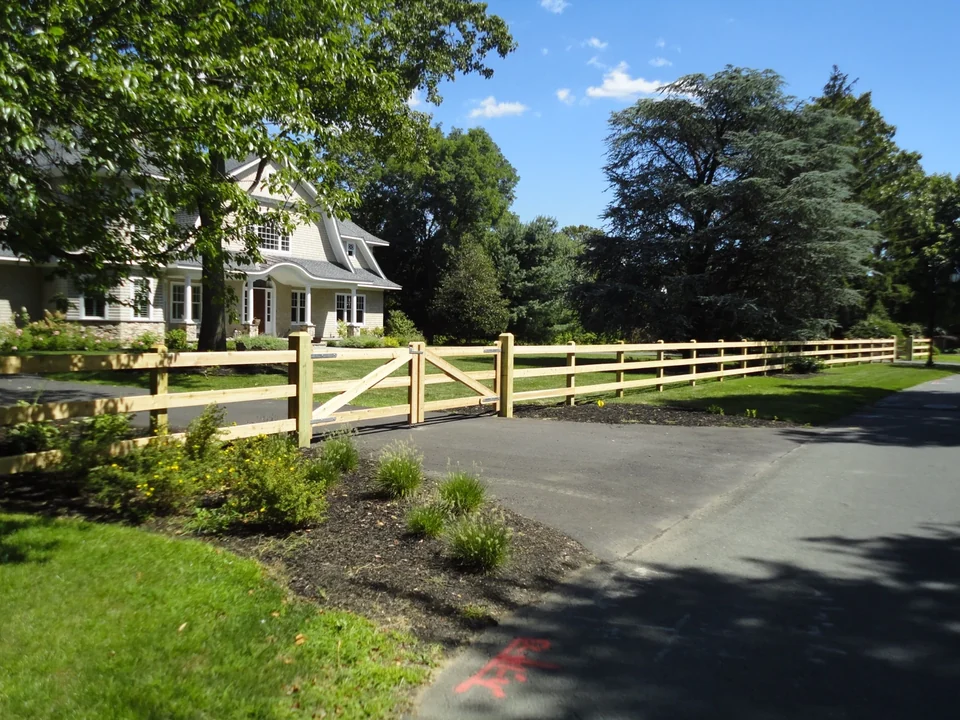
Pressure-treated post and rail on 6x6 posts, mortised together with rounded post tops, built for this property.
View Complete Project →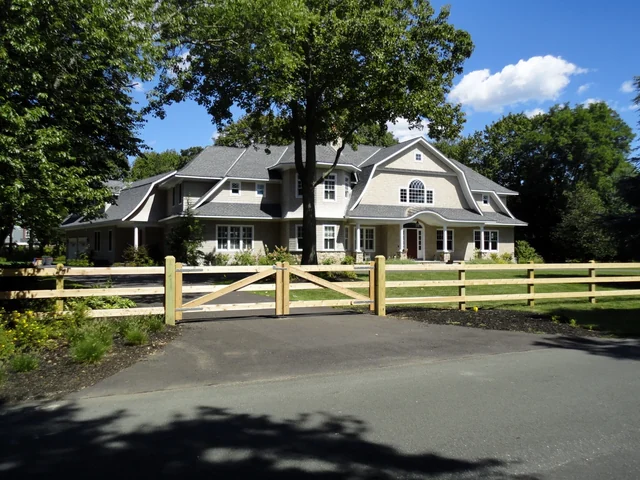
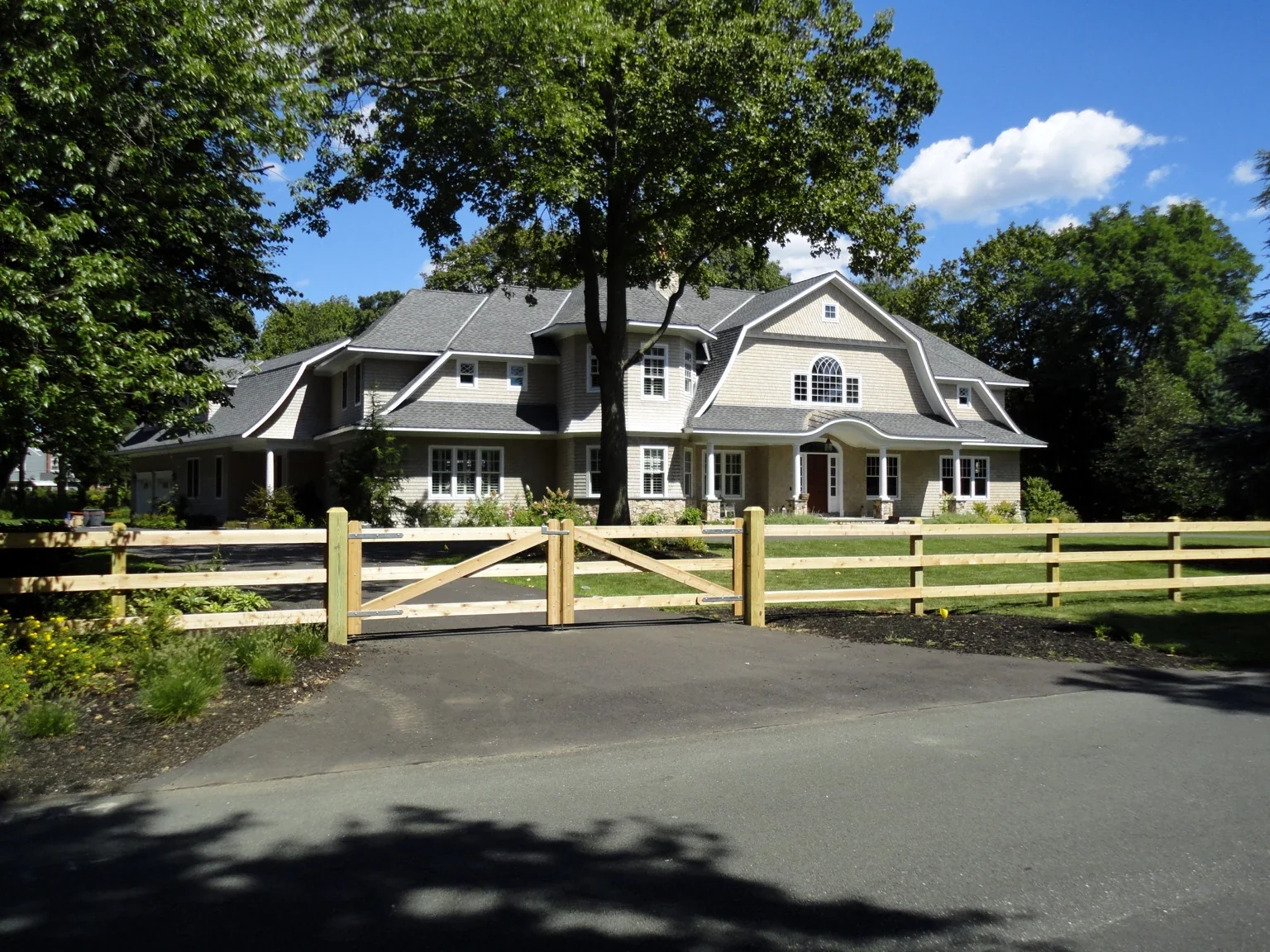
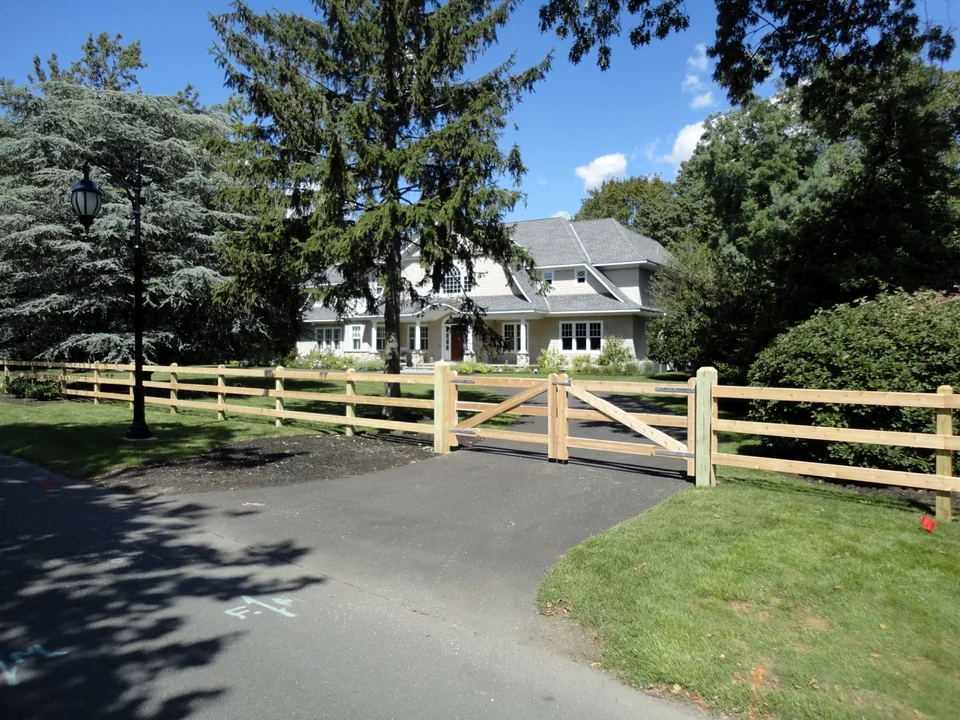
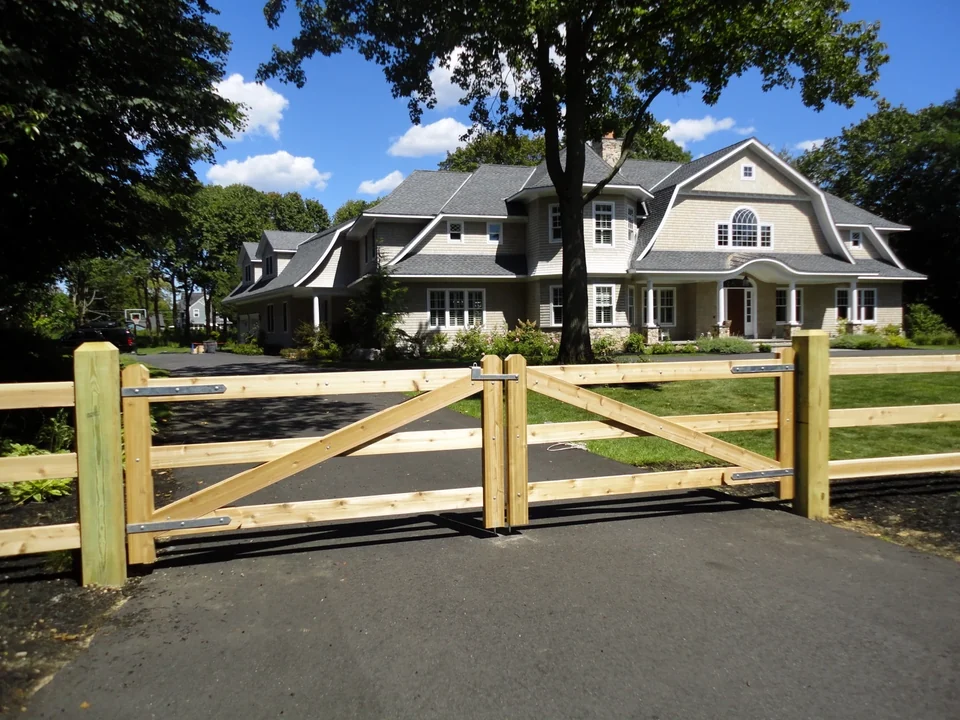
An open cedar board fence built to the homeowner's design, with a double driveway gate on 8x8 posts.
View Complete Project →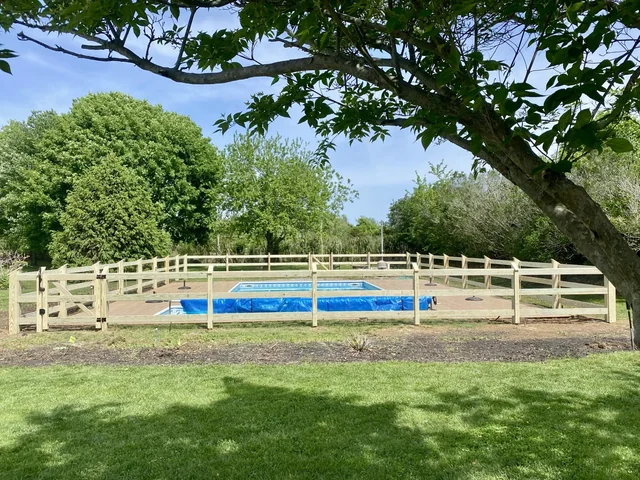
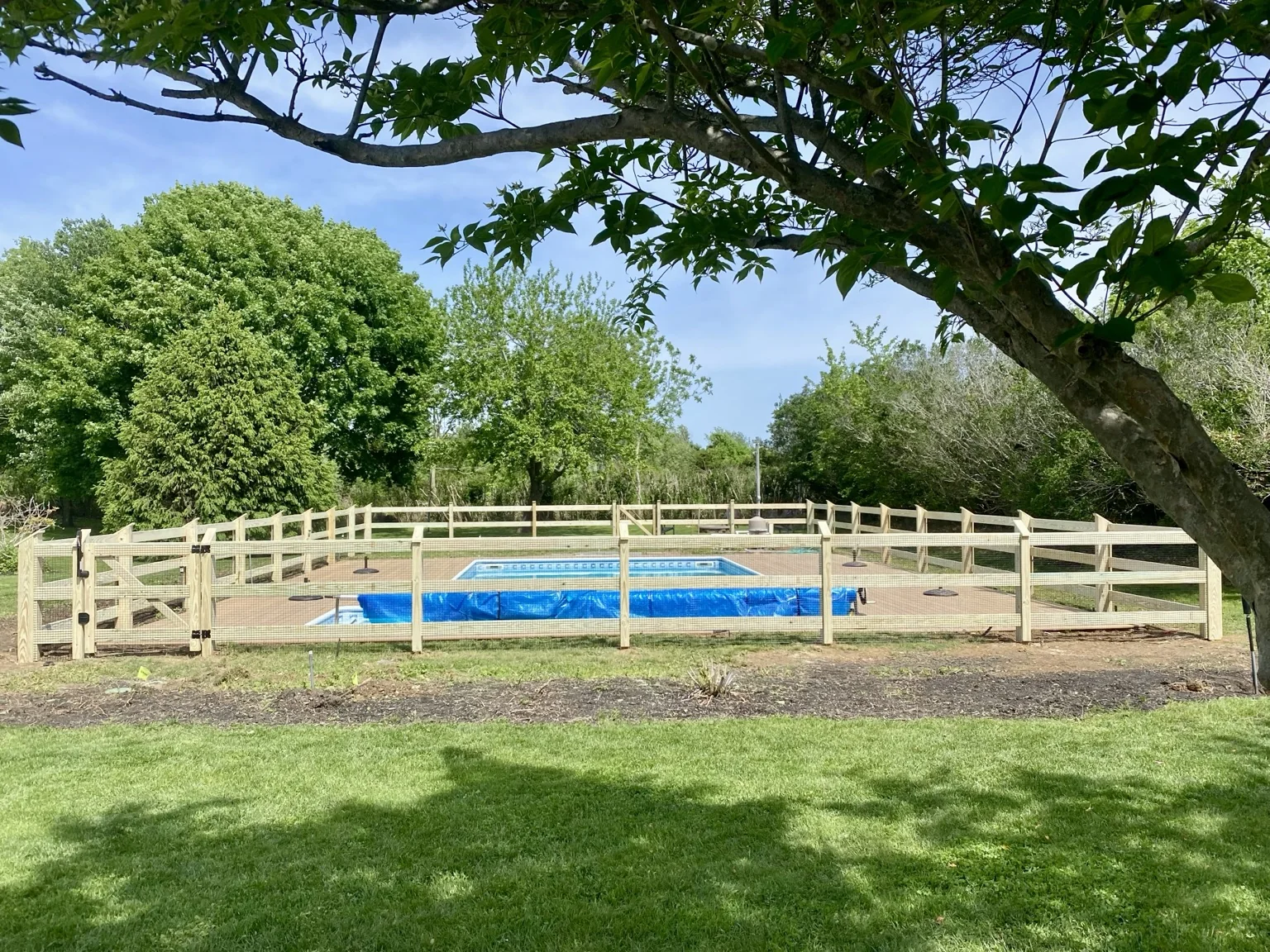
An open-landscape pool barrier that reads as farmland fencing, not pool equipment.
View Complete Project →The three questions that settle most post-and-rail projects.
If the answer is dogs, children or a pool, you need wire. If it is purely a boundary, you do not — and the fence looks better without it.
A run along a back property line, seen from a distance, does not need the same treatment as the fence along the driveway, where every visitor walks past the post tops. That is where custom construction earns its cost.
Post and rail suits open frontage and larger lots. On a small lot it can look like a fence that is not really trying. Wood and cedar fencing may be the better path.
These are wood-based systems, so they sit next to our custom cedar and wood fencing — but they are a different category, built differently and chosen for different reasons. If what you actually want is privacy or a solid custom wood fence, cedar and wood is the page to read. Where the fence encloses a pool, it also has to satisfy the barrier requirements covered on our pool fence comparison page, and our Aquebogue installation is an example of exactly that.
See what customers say about working with Sunrise from the first conversation through the finished installation. Reviews are collected and verified through NiceJob.
Not on its own — an open rail fence has gaps a dog will go through. Welded wire fixed behind the rails solves it without changing how the fence looks from a distance.
Sometimes, and only with wire. Rails on their own leave gaps a pool barrier requirement will not accept, and height, spacing and gate hardware all have to work out on the specific property — so it is not a given on every job. Where it does work it looks like our Aquebogue installation.
Stock systems come in fixed sizes with rails fixed to the face of the post and square-cut post tops. Custom means the fence is built for the property — heavier posts, rails mortised through them, detailing at the post tops. The Remsenburg project shows the difference.
Both are used. Pressure-treated is the workhorse and takes a stain. Cedar costs more and weathers to grey on its own. Which one suits depends on the property and how you want it to age.
Post and rail and board fencing is wood construction, so it overlaps with cedar and wood fencing — but it is chosen for different properties and built differently. Where it encloses a pool, wire and barrier requirements come into it.
Share the property address and what you need the fence to accomplish. We will review the layout and let you know the most useful next step.
Explore financing through Wisetack and check your rate without affecting your credit score. Review available options before deciding how you want to pay.